GPS Asset Tracking: Cellular GPS vs Find My, With Real Cost Math
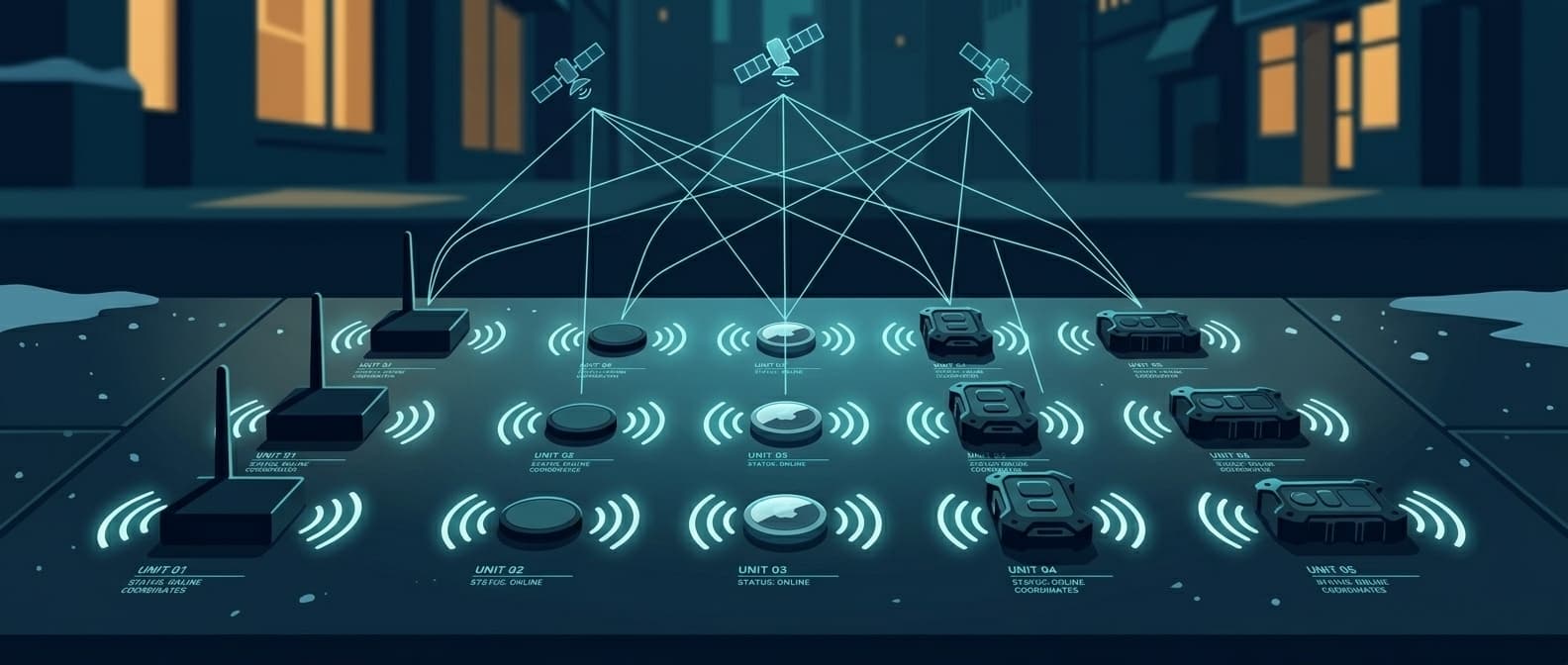
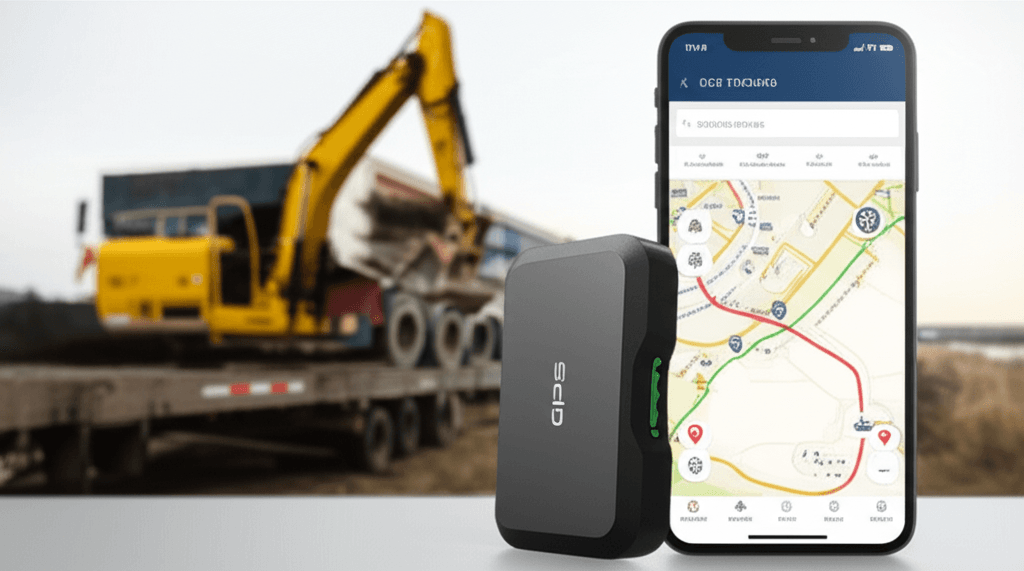
GPS asset tracking uses GNSS satellite signals to calculate where an asset is, then a cellular or satellite radio pushes that location to a cloud dashboard. It is the default for powered vehicles and heavy machinery that need frequent, near real-time updates. For the other side of a fleet, the non-powered assets that sit in a yard or ride on a trailer, a Bluetooth tag on the Apple Find My network tracks location without a SIM card, without a monthly fee, and on a coin cell that lasts years instead of weeks.
This page covers how cellular GPS asset tracking works, what it actually costs per asset per year, how it compares to Find My and RFID, and the honest decision of when each one wins.
Short version: cellular GPS is the right tool for live vehicle telematics. For passive asset and equipment tracking at scale, Find My network tags win on battery life and recurring cost. Most real fleets run both.
How Cellular GPS Asset Tracking Works
A cellular GPS tracker does four things:
- Receive satellite signals. The GNSS receiver picks up timing signals from multiple satellites and calculates its position, typically accurate to 3 to 5 meters under open sky.
- Transmit over cellular. A 4G LTE or LTE-M modem sends that position to a cloud server. This step requires a SIM and a paid data plan.
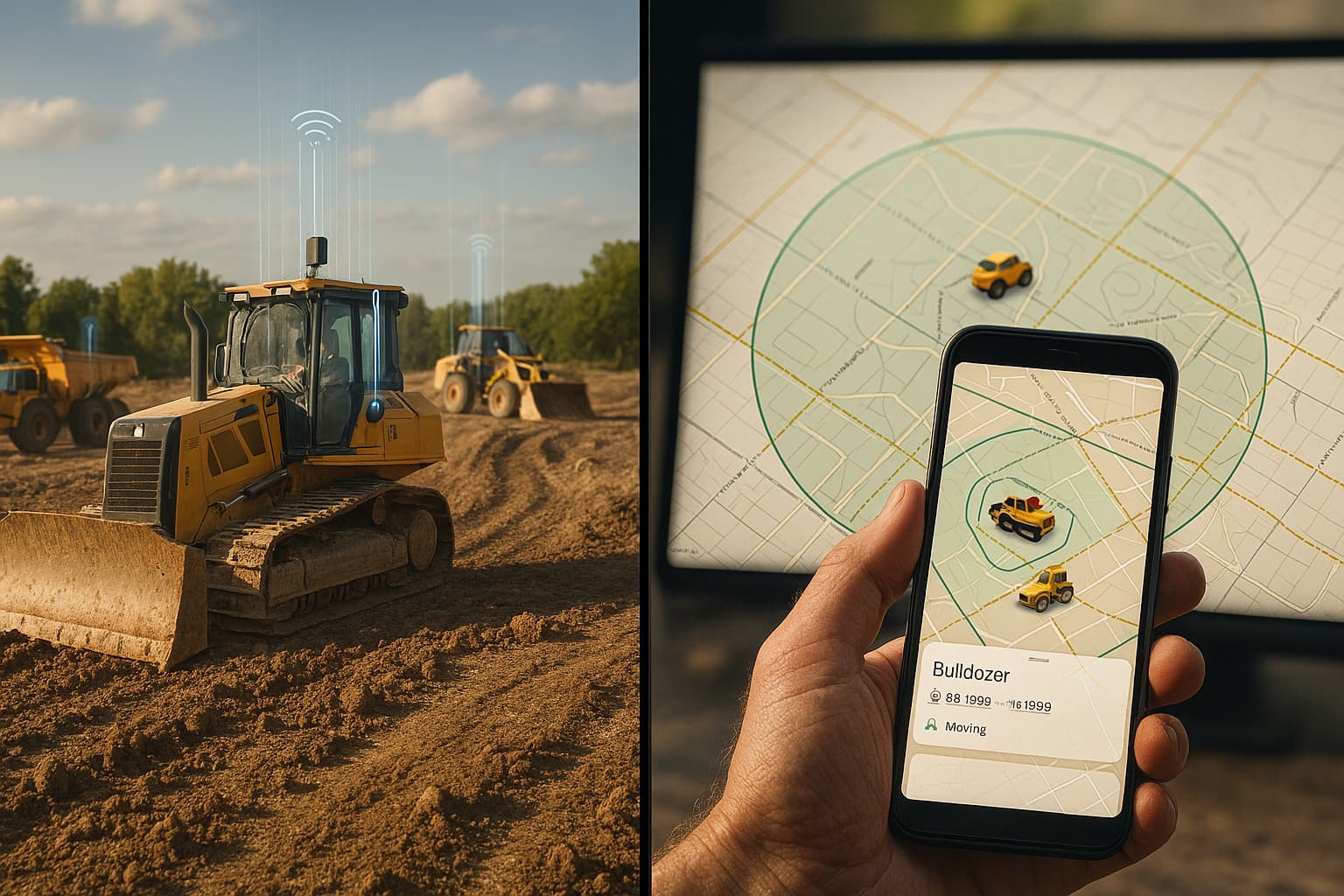
- Store and display. Software plots the asset on a map with location history, geofences, and alerts.
- Repeat on an interval. Update frequency ranges from every few seconds to every several minutes, set by the plan tier and power mode.
The satellite and cellular radios are why cellular GPS drains power fast. A battery-only cellular tracker lasts roughly one to four weeks, which is why most are hardwired into a vehicle's electrical system.
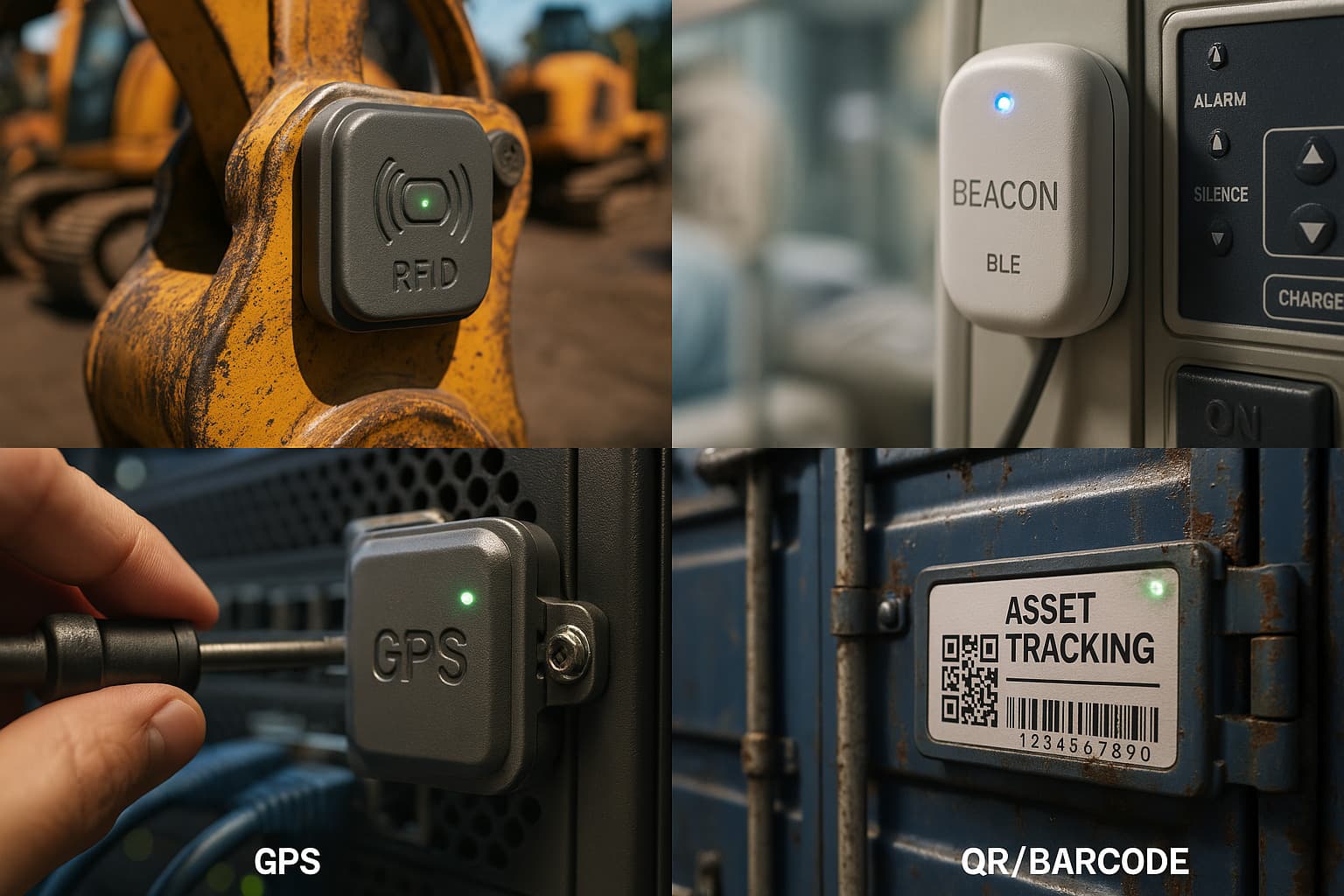
GPS vs Find My vs RFID: The Comparison That Matters
The three technologies solve different problems. Picking the wrong one means either overpaying for live updates you do not need or under-tracking an asset that walks off the job.
| Cellular GPS Tracker | Find My / Bluetooth Tag | Passive RFID | |
|---|---|---|---|
| Hardware cost | $25 to $150 / device | $5 to $30 / tag | $0.10 to $5 / tag |
| Recurring fee | $7 to $45 / device / month | No monthly fee (annual per-tag plan for business features) | None, but readers cost $1,000 to $10,000+ |
| Battery life | 1 to 4 weeks, or hardwired | 1 year+ on a coin cell | Infinite (no battery) |
| Update speed | Seconds to minutes | Minutes, depends on nearby Apple devices | Only when passing a reader |
| Coverage | Anywhere with cell signal | Global, anywhere an Apple device is near | Only at reader chokepoints |
| Works indoors | No (satellite blocked) | Yes | Yes (at readers) |
| Best for | Powered vehicles, live telematics | Non-powered assets, trailers, tools, containers | Fixed-checkpoint inventory counts |
Cellular GPS gives you live position anywhere there is signal. Find My gives you approximate location with a battery that lasts years and no SIM. RFID tells you an asset passed a specific doorway, nothing in between.
What GPS Asset Tracking Actually Costs Per Asset Per Year
Hardware is the number on the sticker. The recurring service plan is what hits the budget every month, and it compounds.
Published 2026 cellular GPS service plans:
- Budget cellular (Trak-4): $6.99 per device per month on an annual plan, $12.99 month-to-month.
- Fleet-grade (Momentum IoT): $16 per asset per month billed annually, $20 month-to-month.
- Typical fleet range across providers: $20 to $45 per device per month, with most basic real-time plans starting near $20 to $25.
Run that across a fleet. At a common mid-tier rate of $25 per device per month:
Cellular GPS service, 50 assets: $25 x 50 x 12 = $15,000 per year in subscription alone, before hardware. Over three years that is $45,000, and that is the plan only.
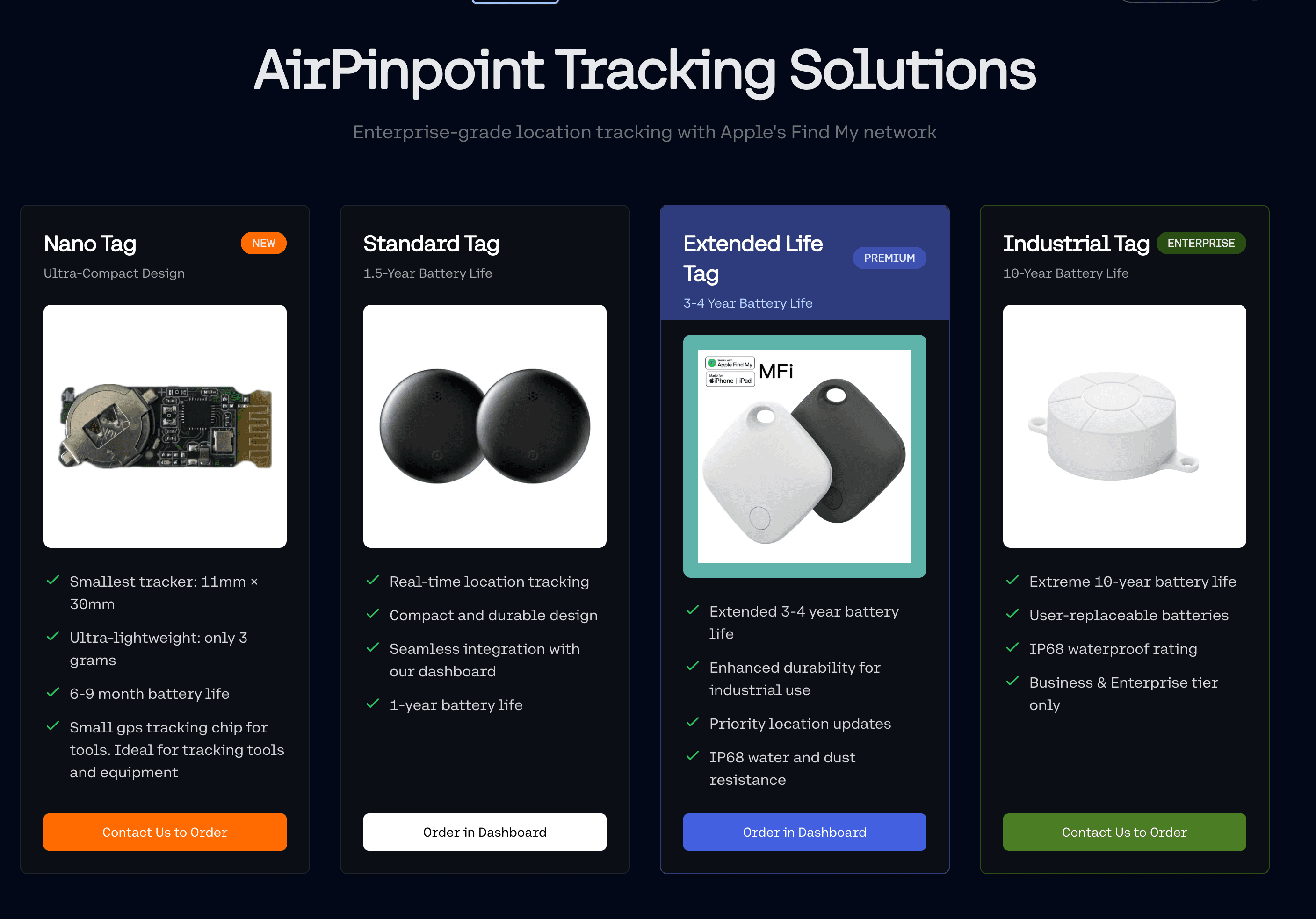
Now the Find My side. A Bluetooth tag relays through the over a billion Apple devices already in the field, so there is no SIM and no cellular plan. The coin cell lasts years, so there are no monthly battery swaps either. Airpinpoint charges a per-tag annual business subscription (geofencing, fleet dashboard, API access, multi-user) rather than a per-device monthly cellular fee.
The structural difference: a $30 cellular tracker on a $25 per month plan costs $930 over three years. A Bluetooth tag with no cellular plan removes that recurring line entirely. On the non-powered share of a fleet, which is usually the majority of the asset count, that is the whole reason teams switch.
When to Use Cellular GPS, and When to Use Find My
This is the honest part, and it is what makes the decision trustworthy. Neither technology wins everywhere.
Does the asset have its own power source?
A vehicle, a running generator, anything with an electrical system. If yes, hardwired cellular GPS makes sense. The vehicle powers the tracker, so battery life is a non-issue and you get live updates.
Do you need second-by-second telemetry?
Live route replay, driver behavior, ELD or hours-of-service compliance. If yes, cellular GPS with an OBD-II or hardwired install. Bluetooth tags do not do live telematics.
Is the asset non-powered?
Trailers, containers, generators when off, tools, scaffolding, portable equipment. Find My tags fit here: no wiring, battery measured in years, and the network reports location whenever any Apple device passes nearby.
Are you tracking dozens of assets and recurring fees are the problem?
Find My removes the compounding monthly cost. This is where most construction, rental, and field-service teams land after running the multi-year math on cellular.
Note: Find My location is not real-time in the cellular sense. Update latency depends on how recently a nearby Apple device reported the tag. In dense areas that is minutes; in remote areas it can be hours. If you need a live second-by-second feed, that is a cellular GPS job.
Where Cellular GPS Accuracy Breaks Down
Teams that have only used cellular GPS often miss these:
- Sky view is required. Accuracy drops when signals are blocked by buildings, bridges, trees, or indoor and underground placement. Plan for exterior mounting in dense environments.
- Indoors is a dead zone. GPS is unreliable inside warehouses, basements, and metal containers. Find My tags keep working there because they relay through nearby phones rather than satellites.
- Cellular dead zones leave gaps. "Nationwide coverage" means "wherever the carrier has towers." Rural job sites, underground parking, and metal containers create gaps in the location timeline that backfill only when signal returns.
Why Teams Move Non-Powered Assets to Airpinpoint
Airpinpoint builds on the Apple Find My network to give GPS-quality location on the assets that do not justify a cellular plan.
No monthly SIM fee: Tags relay through Apple devices already in the field. No cellular plan per device. Years on a coin cell: A single CR2032 lasts years because Bluetooth advertising draws microwatts, not the milliwatts a cellular radio needs. Global coverage: The Find My network spans 150+ countries wherever iPhones, iPads, and Macs are present. Fleet features: Geofence alerts, location history, multi-user access, and API and webhook integrations.
For powered vehicles where you need live telematics, keep cellular GPS. For the non-powered assets that usually make up the majority of a fleet by count, Find My tracking delivers comparable visibility without the recurring fee.
-
GPS asset tracking devices: every type compared: Cellular GPS, satellite, BLE, and RFID devices side by side, with hardware cost, battery life, and a 3-year total cost breakdown.
-
Bluetooth vs GPS vs cellular: How the underlying tracking technologies differ on power, coverage, and cost.
Our 12-Month Minimum (Because We Know It Works)
We require a 12-month minimum. The product is purpose-built, the rollout is fast, and the outcomes are clear. If you want short-term trials, most teams start with a small pilot scope inside the 12-month plan.
 Our Solution