Updated
Anti-Theft Tracking Devices for Equipment and Tools
The National Equipment Register and the NICB put US construction equipment theft losses somewhere between $300 million and $1 billion a year, and they estimate that only 20 to 25 percent of stolen equipment is ever recovered.
We are not going to tell you what theft costs your company, because we do not know. You do. The number is sitting in three places you already have: last year's equipment write-offs, the deductible you paid on each claim you did file, and the days a crew stood around waiting for a replacement to show up. Add those three and you have your real annual theft cost. Compare it to $29 per tag and $11.99 per tag per month and you have your answer.
Most stolen equipment is never seen again. Not because it vanishes, but because nobody knows where it went.
Why Stolen Equipment Rarely Comes Back
Three factors work against recovery:
No location data. When a $2,000 rotary laser disappears from a jobsite, all you can tell police is "it was here yesterday." That is not enough information to act on. Police departments handle thousands of property theft cases per month. A report without leads goes into a pile.
Insurance covers less than you think. Commercial equipment policies typically reimburse replacement cost minus depreciation. A 3-year-old generator that cost $4,500 new might get you $2,200 after the deductible. You also lose productivity during the 2-4 weeks it takes to process the claim and source a replacement.
Thieves know the math. Construction sites are targets because the risk-reward ratio favors the thief. Equipment is expensive, portable, hard to identify once serial numbers are filed off, and almost never tracked. Organized theft rings specifically target jobsites because they know recovery rates are under 25%.
How Equipment Theft Actually Happens
Understanding the threat model helps you choose the right prevention approach.
Opportunistic Jobsite Theft
The most common type by incident count. Someone walks onto an unsecured site after hours and takes what they can carry. Power tools, hand tools, copper wire, batteries. Low value per item, high volume. These losses rarely get reported to police at all, because the per-item value sits under the deductible, which is also why there is no reliable industry percentage for them. If you want yours, count the replacement purchase orders you wrote last year that nobody could explain.
Organized Equipment Rings
Professional operations that target heavy equipment: skid steers, excavators, generators, welders. These crews bring flatbed trailers and can load a piece of equipment in under 10 minutes. The equipment gets moved to a different state within 24 hours and resold through private channels.
Internal Theft and "Borrowing"
Employees taking tools home and never returning them. This is the hardest category to track because it looks like normal equipment movement until the tool stops showing up, and it is the category nobody has credible numbers for, since it is almost never reported as theft. A location trail is unusually good at this one: it does not accuse anybody, it just shows that the impact wrench has spent every night for six weeks at the same residential address.
Tools Left Behind
Not theft, but the effect is the same. A crew finishes a phase on one site, moves to the next, and leaves tools behind. By the time someone notices, the tools are gone. This is a logistics problem, not a security problem, but tracking solves both.
Prevention Approaches Compared
Locks and Chains
A padlock adds 30-60 seconds of resistance. A bolt cutter defeats most construction-grade locks. Gang boxes help for small tools but do nothing for equipment that needs to stay deployed. Locks are a baseline, not a solution.
Security Cameras
Cameras work if someone monitors them in real time. On a construction site with no power and no internet, that means battery-powered cellular cameras at $30-50/month each. Even then, cameras record the theft. They do not prevent it or help you find the equipment afterward.
Cellular GPS Trackers
Dedicated GPS trackers cost $100-300 per unit, plus $25-45/month in cellular service fees. They provide real-time location data, which is genuinely useful for wired vehicle trackers. The downsides: battery-powered GPS units last 1-4 weeks at real update rates, the devices are large enough to find and remove, and the monthly cost makes it impractical to track every tool on a jobsite. At $35/month, tracking 50 tools costs $21,000/year in subscription fees alone.
There is a subtler problem with battery GPS for theft recovery: the devices advertising "3-year battery life" get there by updating once per day. Samsara's battery asset tag at one daily check-in works out to about 1,100 total location reports over three years. That is a breadcrumb once every 24 hours. Stolen equipment can cross three state lines in 24 hours. A once-a-day GPS ping tells you where the equipment was yesterday, not where it is now. Tracki publishes the honest number: 2-3 days of battery in real-time mode. If you want frequent updates for theft recovery, you are recharging the device every few days. AirTags get updates every 1-5 minutes in populated areas because iPhones nearby handle the location fix, and they do it for 12+ months on the same coin cell.
AirTag and BLE Trackers with Airpinpoint
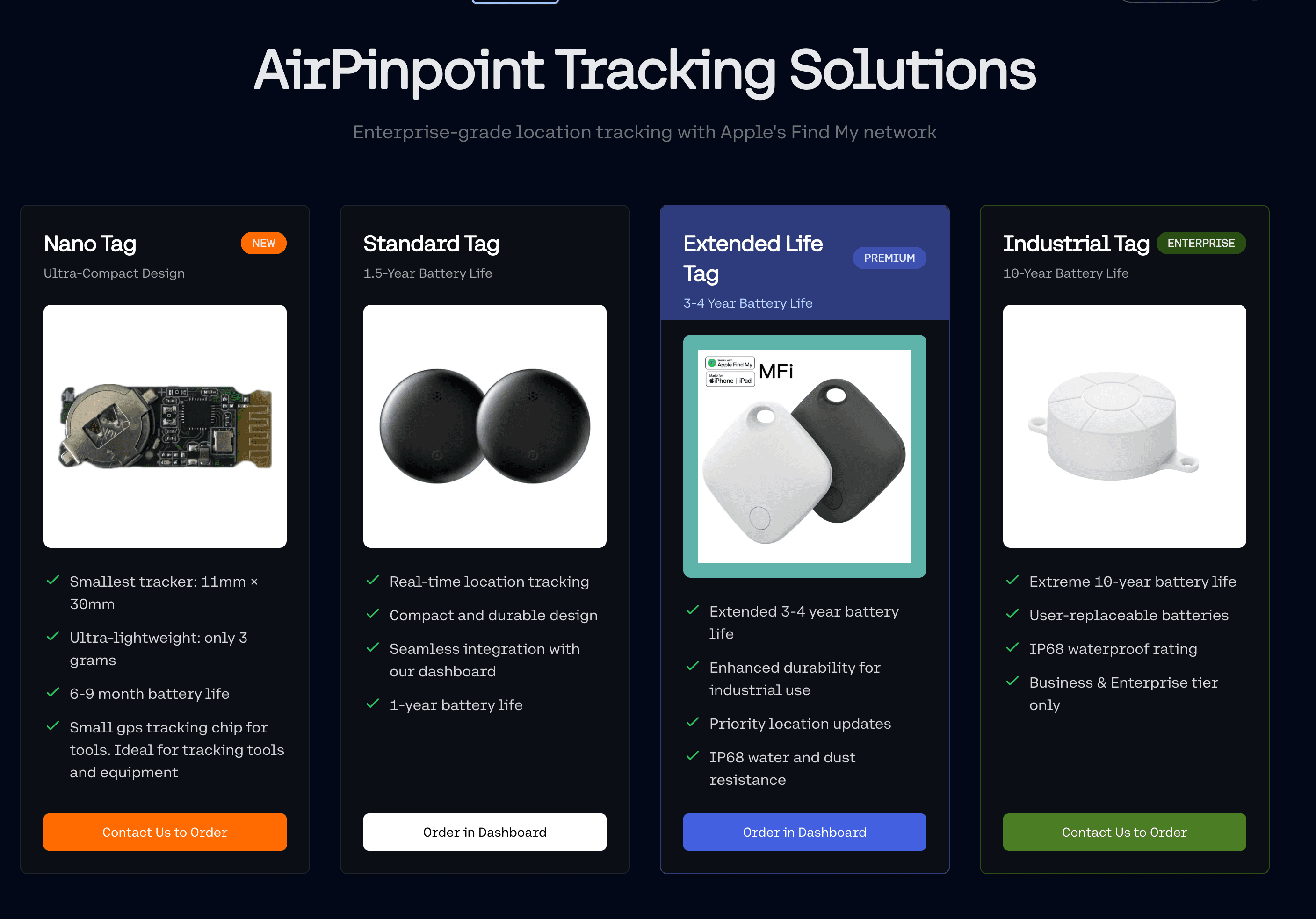
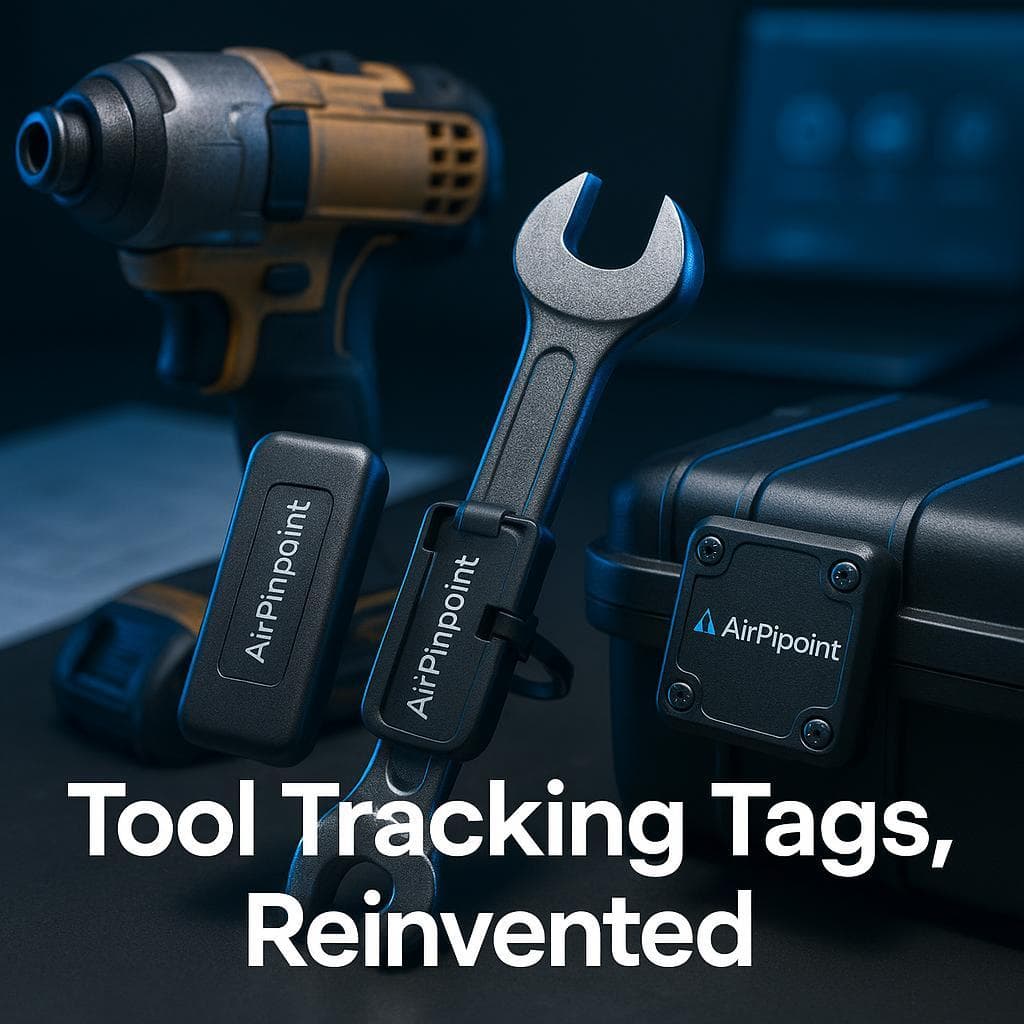
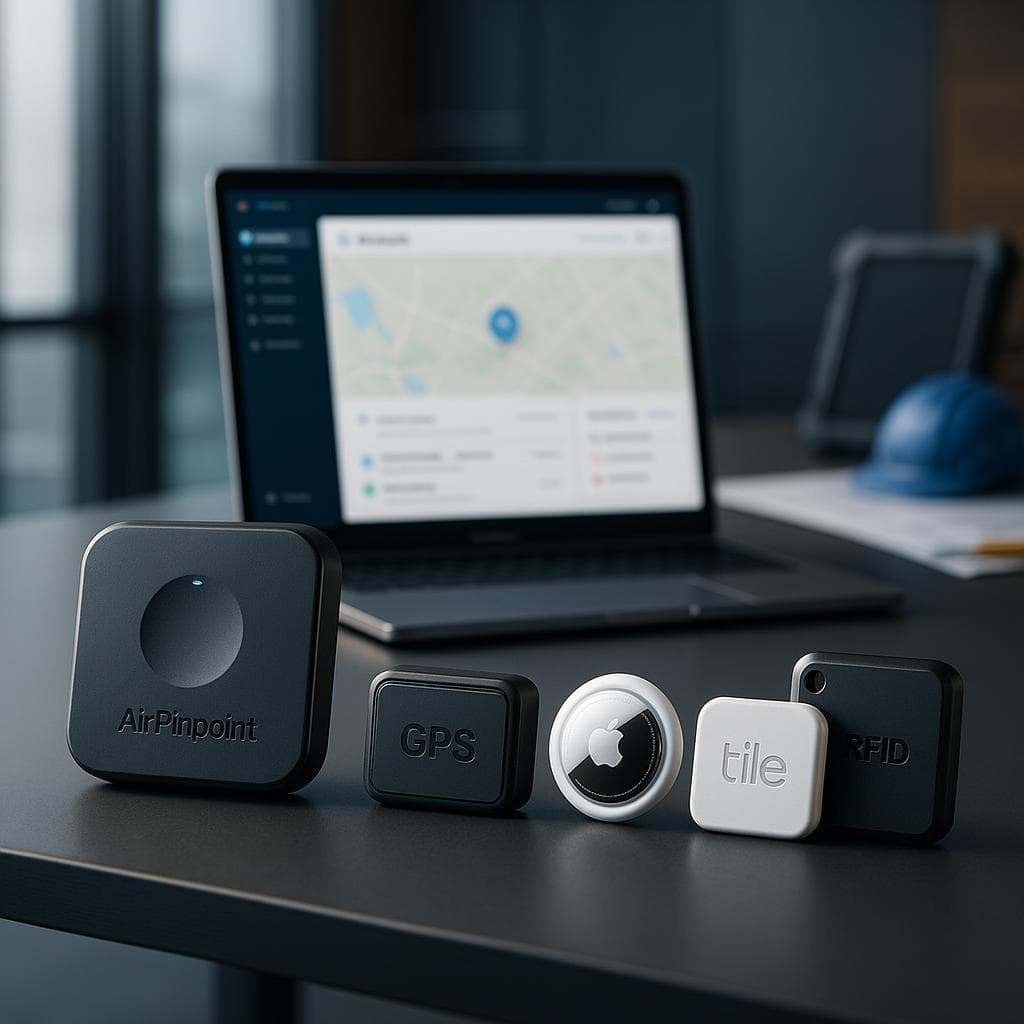
Airpinpoint uses Apple-compatible BLE trackers that cost $29 each, with monitoring at $11.99/device/month. The trackers are coin-sized and have 7+ year battery life. Location data comes from Apple's Find My network, which uses the billion-plus active Apple devices worldwide as passive relay points. No cellular plan required.
The tradeoff: BLE trackers update when an Apple device passes within Bluetooth range (about 30 feet), so updates in dense urban areas happen every few minutes while remote rural areas may have gaps. For theft prevention on active jobsites, hospitals, warehouses, and metro construction, the coverage is more than sufficient.
How Airpinpoint Prevents Theft
Polygon Geofencing with Entry/Exit Alerts
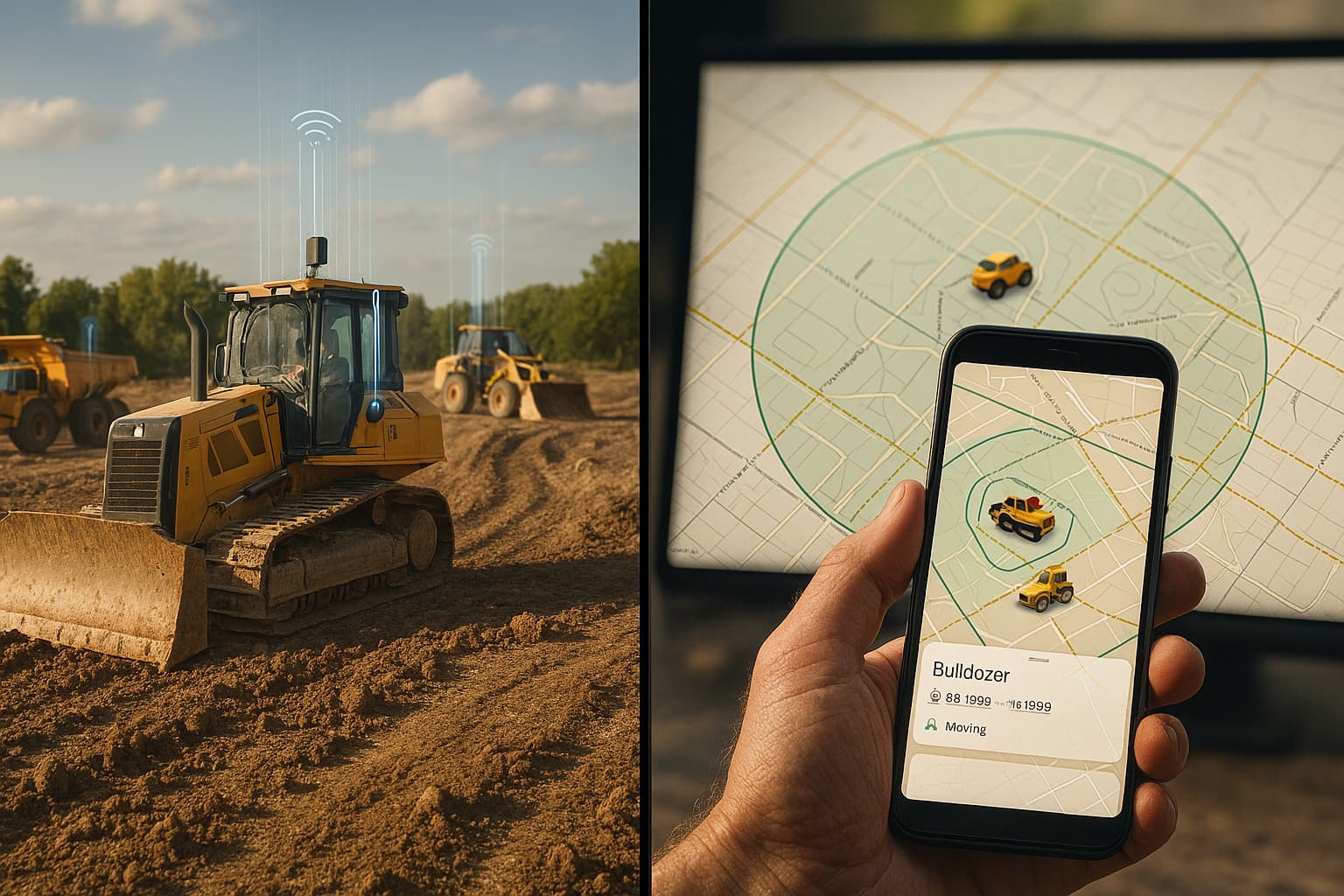
Draw a precise polygon around your jobsite, storage yard, or warehouse on the Airpinpoint map. When any tracked asset crosses that boundary, you get a push notification and email with the exact timestamp and GPS coordinates.
The system uses a 7-consecutive-ping threshold before triggering alerts. This eliminates false alarms from GPS drift or a tool sitting near the fence line. When an alert fires, the asset is actually moving.
After-Hours Movement Notifications
Equipment that moves at 2 AM is equipment that is being stolen. Airpinpoint sends movement notifications when tracked assets change location outside of configured hours, giving you minutes to respond instead of discovering the loss the next morning.
Location History for Recovery
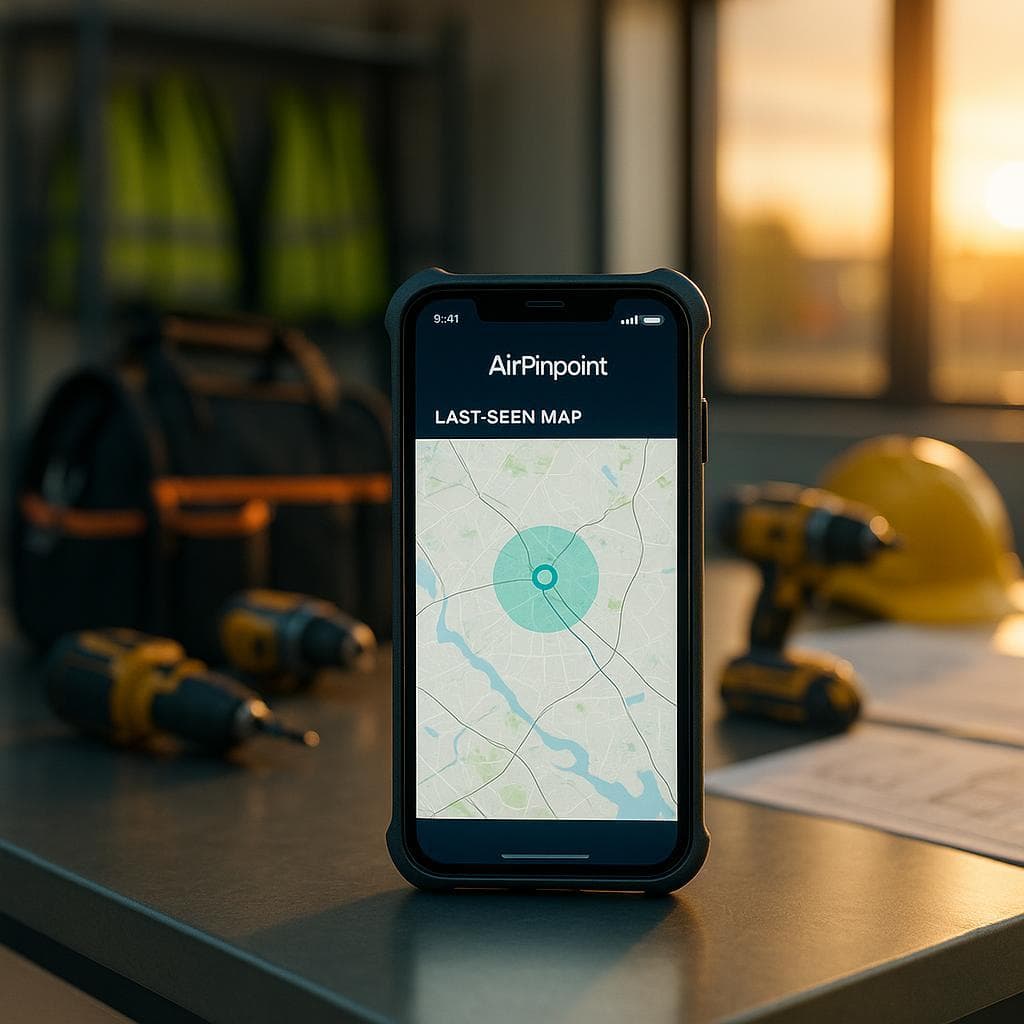
Every location update is stored with a timestamp. When you file a police report, you can provide a map showing exactly where the equipment traveled after it left your site. This changes the conversation from "my generator was stolen" to "my generator is at this address right now."
Team Dashboard
Every team member with access can see all tracked assets on a single map. This solves the "who had it last" problem and makes it obvious when something is missing. Foremen can verify tool counts at end of shift without physically checking every item.
What To Do When Equipment Is Stolen
If an Airpinpoint-tracked asset gets stolen, you have a specific playbook:
-
Check the live location. Open Airpinpoint and find the asset on the map. If it is still moving, you can watch where it goes in near-real-time.
-
File a police report with GPS coordinates. Give the responding officer the current location and a screenshot of the location history trail. Exact coordinates change a property theft case from "we'll add it to the list" to "we can send a unit."
-
Use Precision Finding for the last few steps. Once you are close, Apple's Precision Finding gives a directional arrow and a live distance readout on UWB iPhones, which is what turns "it is somewhere in this lot" into "it is in that vehicle." Apple publishes no range figure for it, and it only works with a genuine AirTag, not with third-party Find My accessories that carry no UWB radio.
-
Provide location history to investigators. The timestamped trail shows the route the equipment took, which can identify patterns in serial theft cases and help link multiple incidents to the same suspect.
Cost Comparison: No Tracker vs GPS vs Airpinpoint
| No Tracker | GPS Tracker | Airpinpoint | |
|---|---|---|---|
| Hardware cost | $0 | $100-300/device | $29/device |
| Monthly fee | $0 | $25-45/device | $11.99/device |
| Battery life | N/A | 1-4 weeks at real update rates (years only at ~1 update/day) | 7+ years |
| Annual cost (20 devices) | $0 | $6,000-10,800 | $2,877.60 |
| What you can tell police | "It was here Friday" | Current coordinates plus a route history | Current coordinates plus a route history |
| Industry recovery rate | 20-25% of stolen equipment (National Equipment Register) | No published rate exists | No published rate exists |
| Geofence alerts | No | Yes | Yes |
| Location history | No | Yes | Yes |
| Device size | N/A | Deck of cards | Coin-sized |
| Maintenance | None | Weekly charging | None for 7+ years |
For a 20-device deployment, Airpinpoint costs $2,877.60/year in subscription plus $580 in hardware. A GPS alternative costs $6,000 to $10,800/year in subscription plus $2,000 to $6,000 in hardware. That cost gap, $3,122 to $7,922 a year before hardware, is the only number on this page we can prove, because it comes from both vendors' published rate cards.
What we deliberately do not claim is a recovery rate. Nobody has run a controlled study of tagged versus untagged equipment, ourselves included, and any vendor quoting you a "93% recovery rate" made it up. What changes with a tag is narrower and easier to check: the police report has a current address in it instead of a date range. Whether a department acts on that address is up to the department, and we have no law enforcement partnerships that would make them.
Pricing
| Plan | Monthly Cost | Includes |
|---|---|---|
| Business | $11.99/device/month | Geofencing, alerts, location history, team access |
| Enterprise | $14.99/device/month | API access, webhooks, custom integrations, priority support |
| Hardware | $29/tracker (one-time) | 7+ year battery, Apple Find My compatible |
No contracts. Cancel anytime. Volume discounts available for 100+ devices.
Get Started
Attach an Airpinpoint tracker to each tool or piece of equipment. Set up geofences around your sites. Start receiving alerts when things move where they should not.
The entire setup takes under 5 minutes per device. No wiring, no charging stations, no cellular plans to manage.
 Our Solution