
True Cost of Asset Tracking 2025: Hidden Fees, TCO Analysis & Pricing Breakdown
Beyond the Monthly Fee
Asset tracking pricing appears straightforward: $25-35 per vehicle per month. But the true cost includes hardware, installation, activation fees, contract penalties, and add-ons that can double or triple your actual spend.
This analysis breaks down every cost component, compares major providers, and calculates real total cost of ownership for fleets of 10 to 100+ assets.
Cost Components Breakdown
Hardware Costs
| Hardware Type | Cost Range | Notes |
|---|---|---|
| Plug-and-play OBD-II | $40-150 | Self-install, vehicle power, easy to steal |
| Basic hardwired GPS | $100-200 | Professional install recommended |
| Fleet-grade hardwired | $250-400 | Tamper-resistant, professional install required |
| Advanced with dashcam | $500-750 | AI dashcam units, significant upfront cost |
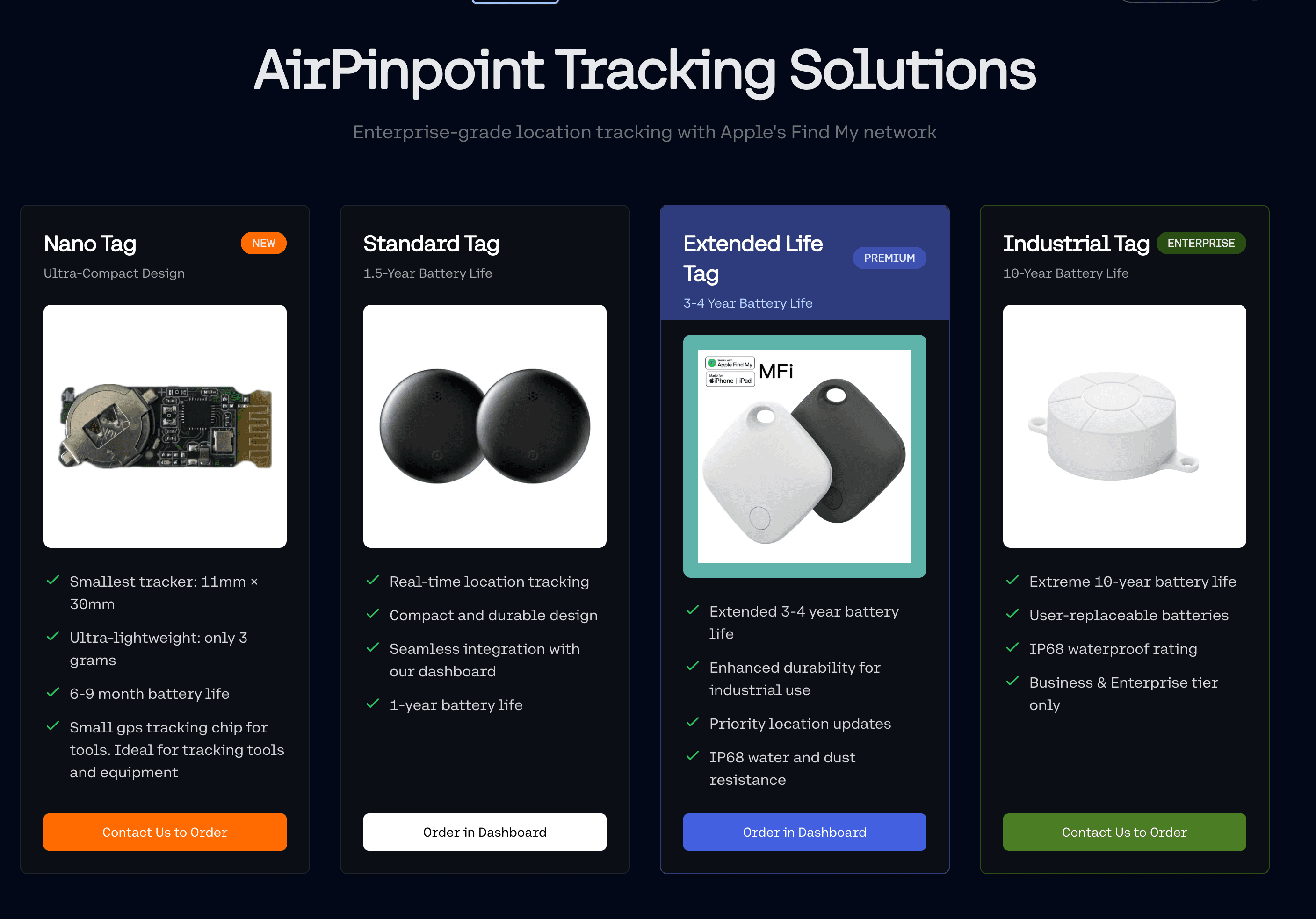
| Apple AirTag | $29 | No install, battery-powered, 1-year life |
Hardware lifespan: Quality GPS devices last 3-5 years. Budget for 10-15% annual replacement due to failures, damage, or obsolescence.
Monthly Subscription Tiers
| Tier | Monthly Cost | Features Included |
|---|---|---|
| Entry-level | $15-20/vehicle | Basic location, simple reports |
| Mid-range | $25-45/vehicle | Geofencing, detailed reports, alerts |
| Premium | $50-85/vehicle | AI dashcams, ELD, advanced analytics |
| Enterprise | $70-100+/vehicle | Full compliance suite, custom integrations |
Most businesses need mid-range features. Entry-level often lacks geofencing and useful alerts. Premium is overkill unless you need ELD compliance or driver monitoring.
Hidden Fees
| Fee Type | Typical Cost | When It Hits |
|---|---|---|
| Activation fee | $25-50/device | Account setup |
| Installation (hardwired) | $50-250/vehicle | Professional install |
| Data overage | $5-10/month | High-frequency tracking |
| Premium features | $5-20/month | Geofencing, advanced reports |
| Hardware replacement | $100-400/device | Annual (10-15% fail rate) |
| Training | $200-400/hour | 10-30 hours typical |
| Integration | $1,000-5,000 | ERP/TMS connectivity |
| Data migration | $500-2,000 | Switching providers |
| Early termination | Remaining contract × all devices | Contract exit |
The termination trap: At $35/month with 24 months remaining across 100 vehicles, early termination costs $84,000.
Provider Pricing Comparison
Enterprise Providers
| Provider | Monthly/Vehicle | Hardware | Contract | Early Termination |
|---|---|---|---|---|
| Samsara | $27-69+ | $99-499 | 3 years typical | Remainder of contract |
| Verizon Connect | $23.50-65+ | $100-250 | 1-3 years | Varies |
| Geotab | $20-60+ | $80-200 (owned) | 3 years minimum | Remainder of contract |
| GPS Trackit | $25-40+ | Included/rental | 3 years | $150/device |
Note: Published prices are starting points. Actual pricing depends on fleet size, features, and negotiation. Enterprise quotes are typically 20-40% below list prices for 100+ vehicles.
Consumer/SMB Providers
| Provider | Monthly/Vehicle | Hardware | Contract |
|---|---|---|---|
| Tracki | $9.95-24.95 | $20-50 | Month-to-month |
| LandAirSea | $19.95 | $30-70 | Month-to-month |
| Bouncie | $8-10 | $67-90 | Month-to-month |
| Azuga | $25+ | Varies | No termination fees |
Consumer trackers offer flexibility but lack enterprise features, support, and integration capabilities.
Total Cost of Ownership: 3-Year Analysis
50-Vehicle Fleet
Enterprise GPS (Samsara/Verizon-level)
| Cost Component | Year 1 | Year 2 | Year 3 | Total |
|---|---|---|---|---|
| Hardware | $7,500 | $1,125 (15% replacement) | $1,125 | $9,750 |
| Installation | $5,000 | $225 | $225 | $5,450 |
| Activation | $1,250 | $0 | $0 | $1,250 |
| Monthly ($40/vehicle) | $24,000 | $24,000 | $24,000 | $72,000 |
| Training | $1,500 | $0 | $0 | $1,500 |
| Total | $39,250 | $25,350 | $25,350 | $89,950 |
Per vehicle per year: ~$600
Mid-Range GPS (Geotab-level)
| Cost Component | Year 1 | Year 2 | Year 3 | Total |
|---|---|---|---|---|
| Hardware | $5,000 | $750 | $750 | $6,500 |
| Installation | $2,500 | $115 | $115 | $2,730 |
| Activation | $625 | $0 | $0 | $625 |
| Monthly ($30/vehicle) | $18,000 | $18,000 | $18,000 | $54,000 |
| Total | $26,125 | $18,865 | $18,865 | $63,855 |
Per vehicle per year: ~$426
Consumer GPS (Tracki-level)
| Cost Component | Year 1 | Year 2 | Year 3 | Total |
|---|---|---|---|---|
| Hardware | $1,750 | $525 (30% replacement: batteries, loss) | $525 | $2,800 |
| Monthly ($15/vehicle) | $9,000 | $9,000 | $9,000 | $27,000 |
| Total | $10,750 | $9,525 | $9,525 | $29,800 |
Per vehicle per year: ~$199
AirTags + Fleet Management Platform
| Cost Component | Year 1 | Year 2 | Year 3 | Total |
|---|---|---|---|---|
| Hardware (50 × $29) | $1,450 | $0 | $0 | $1,450 |
| Airpinpoint (50 × $11.99 × 12) | $7,194 | $7,194 | $7,194 | $21,582 |
| Batteries (50 × $5) | $250 | $250 | $250 | $750 |
| Total | $8,894 | $7,444 | $7,444 | $23,782 |
Per asset per year: ~$159
A correction worth flagging, since this page is about honest pricing: a previous version of this table showed the platform at roughly $150 per month total, which is not our price and made this column look four times cheaper than it is. Airpinpoint is $11.99 per tag per month. The figures above are the real ones.
If you skip the platform entirely and run raw AirTags in Apple's Find My app, the three-year cost is the $1,450 hardware plus $750 in batteries, and you get a list of items on a phone with no geofences, no history export, no team access, no API and no web dashboard. That is a legitimate choice for a small number of assets and we would rather you know it exists.
Cost Comparison Summary
| Solution | 3-Year Total | Per Asset/Year | vs Enterprise |
|---|---|---|---|
| Enterprise GPS | $89,950 | $600 | - |
| Mid-range GPS | $63,855 | $426 | 29% less |
| Consumer GPS | $29,800 | $199 | 67% less |
| AirTags + Airpinpoint | $23,782 | $159 | 74% less |
| Raw AirTags, no platform | $2,200 | $15 | 98% less, and no dashboard, geofences, history export, API or team access |
Contract Traps to Avoid
The Multi-Device Date Problem
When you buy devices over time, each has its own contract expiration:
- January: Buy 20 devices → Expire January (3 years later)
- June: Buy 15 devices → Expire June
- November: Buy 10 devices → Expire November
Result: Multiple renewal dates to track. Miss one 30-45 day cancellation window, and you're locked in again, often with rate increases.
Auto-Renewal Gotchas
Standard contract terms include:
- Automatic renewal unless canceled in writing
- 30-45 day advance notice required, and some vendors require 60-90
- An annual price escalator, or a higher rate on renewal
- Per-device contract terms (not fleet-wide)
On the escalator: Hapn's breakdown of fleet tracking contract hidden costs works through an example at 4% compounding annually, taking $22.50 per device to $24.34 by year three, and notes that auto-renew rate increases in the 5-10% range are common. Hapn is a tracking vendor writing about its competitors, so read it accordingly, but the mechanism is easy to verify yourself: it will be written in the contract you are being asked to sign. Some escalators are tied to an inflation index with no cap, which is worth modelling against a bad year before signing.
Defense: Calendar every expiration date. Request single-date fleet renewals. Get the escalator capped in writing, or struck.
Termination Fee Calculation
| Contract Terms | Remaining | Vehicles | Termination Fee |
|---|---|---|---|
| $35/mo, 24 months left | 24 | 50 | $42,000 |
| $35/mo, 24 months left | 24 | 100 | $84,000 |
| $40/mo, 12 months left | 12 | 75 | $36,000 |
GPS Trackit specifies a flat $150/device termination fee. Azuga and GTS Fleet have no termination fees.
Add-On Costs: ELD, Dashcams, and More
Electronic Logging Device (ELD) Compliance
| Plan Type | Monthly/Vehicle | Includes |
|---|---|---|
| Basic ELD | $35-40 | HOS tracking, basic GPS |
| Standard | $50-60 | + Dispatching, IFTA reporting |
| Complete | $70-85 | + AI dashcam, full compliance |
Hardware: ELD devices add $200-400 upfront. Required for commercial motor vehicles over 10,001 lbs.
AI Dashcams
| Component | Cost |
|---|---|
| Hardware (per camera) | $500-750 |
| Monthly service | $15-30/camera |
| Data usage (>1GB) | $5-10/camera |
Note: Some providers bundle dashcam hardware in monthly fees. Others charge separately. Clarify before signing.
Comparison: GPS Add-Ons vs Base Solutions
| Solution | Base Cost | + ELD | + Dashcam | Full Suite |
|---|---|---|---|---|
| Enterprise GPS | $40/mo | $75/mo | $105/mo | $120/mo |
| Mid-range GPS | $30/mo | $65/mo | $95/mo | $110/mo |
| AirTags + Airpinpoint | $11.99/mo | N/A | N/A | $11.99/mo |
AirTags do not replace ELD or dashcam requirements, and there is no add-on tier that would. If you are subject to ELD rules, that is a separate purchase no matter what else you do. What the flat line buys you is that there is nothing to upsell: one price, all features, cancel anytime.
Volume Discounts: What Large Fleets Actually Pay
Discount Tiers
| Fleet Size | Typical Discount | Resulting Price (from $40 base) |
|---|---|---|
| 1-24 vehicles | 0% | $40/vehicle |
| 25-49 vehicles | 10-15% | $34-36/vehicle |
| 50-99 vehicles | 15-25% | $30-34/vehicle |
| 100+ vehicles | 20-40% | $24-32/vehicle |
Enterprise Pricing Reality
Published rates are starting points. A 100-vehicle fleet should negotiate:
- 25-35% below list price
- Single renewal date for entire fleet
- Rate lock for contract term
- Reduced or eliminated activation fees
- Free installation or hardware subsidies
- Termination fee caps or waivers
Leverage: Get competing quotes. Providers are more flexible when they know you're evaluating alternatives.
ROI Analysis: When GPS Tracking Pays Off
Documented Savings
These are the figures GPS vendors publish in their own marketing. We are reproducing them because you will be quoted them in a sales call and should recognise them, not because we have verified them. We looked for the underlying studies and did not find them.
| Benefit | Typical vendor claim | Status |
|---|---|---|
| Fuel reduction | 10-15% | Vendor claim, source not published |
| Idle time reduction | 20-30% | Vendor claim, source not published |
| Maintenance cost reduction | 15-20% | Vendor claim, source not published |
| Insurance premium reduction | 5-15% | Verifiable, but only by your own broker |
| Administrative time savings | 15-25% | Vendor claim, source not published |
| Productivity improvement | 10-15% | Vendor claim, source not published |
The insurance row is the one worth chasing, because it is the only one you can confirm before you buy. Call your broker and ask what credit, if any, your carrier gives for telematics on your class of vehicle. The answer is specific, binding and frequently smaller than the sales deck implies.
Payback Period by Industry
| Industry | Typical vendor-quoted payback |
|---|---|
| Delivery services | 2-4 months |
| Construction | 3-6 months |
| Service fleets | 4-6 months |
| General commercial | 6-8 months |
Same caveat: these come from vendor marketing. Ask whoever quotes you a payback period to show the study, and note whether the answer is a study or another brochure.
The caveat that actually matters: all of these benefits apply to active vehicles with drivers. Trailers, equipment and tools do not burn fuel and have no driver to coach, so the fuel, idle and behaviour lines are simply zero for them. GPS tracking ROI collapses for non-motorized assets, which is the single most useful thing on this page for deciding what to put where.
AirTag ROI Calculation
AirTags prevent losses rather than optimize operations, so the arithmetic is a single division rather than a projected percentage. Below, "assets covered" means a full first year: $29 for the tag plus $143.88 in subscription, so $172.88 per asset.
| Scenario | Value recovered | Assets covered for a full year |
|---|---|---|
| One stolen tool kit | $500 | 2 |
| One trailer | $15,000 | 86 |
| One piece of equipment | $30,000 | 173 |
A previous version of this table divided by the $29 hardware price alone and claimed a $30,000 recovery funded 1,034 AirTags. That ignored the subscription, which is most of the cost. The corrected numbers are above.
The bigger honesty point: this table assumes the recovery happens. A tag makes a police report specific, which is a real change from "the yard was full Friday and empty Monday." It does not guarantee anyone acts on it, we have no law enforcement partnerships, and recovery remains entirely the police department's call.
When Each Solution Makes Sense
GPS Tracking Justified When:
- ELD compliance required: Commercial motor vehicles need it
- Driver behavior matters: Speed, routes, idling need monitoring
- Real-time dispatch critical: Delivery ETAs, emergency response
- Insurance requires it: Some policies mandate GPS
- High fuel costs: 10-15% reduction on big fleets is significant
- Remote operations: Assets in areas without Apple device traffic
AirTags Make Sense When:
- Cost is the priority: about $159/year per asset vs $200-600/year
- Assets don't move constantly: Equipment, trailers, containers
- No compliance requirements: Non-regulated vehicles
- Urban/suburban operations: Good Find My network coverage
- Tool and equipment tracking: Items that don't need driver monitoring
- Contract flexibility matters: No commitments, cancel anytime
The Hybrid Approach
Many organizations optimize with both:
Use GPS for:
- Primary fleet vehicles (fuel savings justify cost)
- Regulated commercial vehicles (ELD compliance)
- Vehicles with driver performance concerns
- High-value assets in remote areas
Use AirTags for:
- Trailers and unpowered assets
- Construction equipment
- Tools and portable equipment
- Local delivery vehicles
- Backup tracking on GPS-equipped assets
Result: Complete visibility at a fraction of GPS-only cost.
Our Recommendation
For operations prioritizing cost efficiency: on the corrected numbers the gap is roughly 1.5x against consumer GPS and close to 4x against enterprise GPS, not the 10x figure this page used to print. That is still a real difference at fleet scale, but it is a difference worth stating accurately, because a vendor who inflates it on the cheap end will inflate other things too. If your assets operate in populated areas and you do not need ELD compliance or driver monitoring, enterprise GPS subscriptions are hard to justify.
For operations requiring compliance and driver management: GPS tracking delivers measurable ROI through fuel savings, behavior monitoring, and regulatory compliance. Factor in the full TCO, not just monthly fees, when budgeting.
For most mixed operations: Track vehicles that need GPS with GPS. Track everything else with AirTags. You'll maintain complete visibility while avoiding $200-600/year per asset for capabilities you don't need.
The bottom line: Asset tracking costs what it costs. But many businesses pay premium prices for premium features they never use. Match the solution to the actual need, and the savings can fund tracking on assets that previously went unmonitored.



 Our Solution