
Tool Crib Manager
A tool crib manager is the backbone of manufacturing efficiency. When tools are organized, tracked, and available, production flows smoothly. When they're not, everything grinds to a halt, and unplanned downtime costs manufacturing $50 billion annually.
This guide covers everything you need to know about the tool crib manager role in 2025: responsibilities, salary expectations, required skills, and the software tools that make the job manageable.
What Does a Tool Crib Manager Do?
The tool crib manager is responsible for overall tool crib operations. They develop and oversee policies and procedures related to the acquisition, storage, use, and disposal of tools. As part of the management team, they collaborate with different departments to ensure that the right tools are available and in optimal condition for production needs.
Daily Operations
| Responsibility | Description |
|---|---|
| Check-out/check-in processing | Ensure every tool leaving the crib is logged and returned on time |
| Inventory management | Track usage and condition of tools, maintain optimal availability |
| Receiving inspection | Inspect incoming tools for quality and compliance |
| Tool maintenance coordination | Schedule calibrations, repairs, and replacements |
| Stock level monitoring | Ensure consumables are reordered before stockouts |
Strategic Responsibilities
| Responsibility | Description |
|---|---|
| Vendor management | Negotiate pricing and terms with tool suppliers |
| Purchase order generation | Create POs for standard and perishable tooling, maintenance items, and operator supplies |
| Blanket PO management | Manage large blanket purchase orders for industrial suppliers |
| Process improvement | Identify bottlenecks and implement better workflows |
| Budget management | Track spending, justify purchases, control costs |
| Staff supervision | Supervise tool crib attendants and coordinate activities |
| Training | Onboard new employees on checkout procedures |
Compliance & Quality
- Ensure all tools are calibrated and maintained as required by law and company policy
- Implement and enforce tool management policies
- Maintain documentation for regulatory audits (especially in aerospace, automotive, medical)
- Increase tool inventory accuracy through cycle count procedures
The Hidden Cost of Poor Tool Crib Management
Without effective management, manufacturing facilities suffer significant losses:
| Problem | Impact |
|---|---|
| Missing tools | 15-30 min search time per incident |
| Duplicate purchases | $5,000-20,000/year in unnecessary spending |
| Production delays | $500-5,000/hour in lost output |
| Tool hoarding | 20-40% of tools sitting unused in personal areas |
| FOD incidents (aerospace) | $13 billion/year industry-wide |
| Unplanned downtime | $50 billion/year across manufacturing |
A good tool crib manager eliminates these problems. A great one turns the tool crib into a competitive advantage.
Tool Crib Manager Salary (2025 Data)
National Averages
Salary data varies by source, reflecting different sample populations:
| Source | Average Salary | Hourly Rate |
|---|---|---|
| Glassdoor | $51,673/year | ~$25/hour |
| ZipRecruiter | $46,859/year | ~$23/hour |
| Indeed | $45,240/year | $21.75/hour |
| PayScale | $43,000/year | $20.69/hour |
Salary Range
| Percentile | Annual Salary |
|---|---|
| Entry (10th) | $25,000-$35,000 |
| 25th Percentile | $44,105 |
| Median (50th) | $51,673 |
| 75th Percentile | $61,076 |
| Top Earners (90th) | $70,865-$84,000 |
Experience-Based Pay Progression
| Experience Level | Hourly Rate | Annual Equivalent |
|---|---|---|
| Entry-level (under 1 year) | $15.53/hour | ~$32,000 |
| Early career (1-4 years) | $19.89/hour | ~$41,000 |
| Mid-career (5-9 years) | $23-25/hour | ~$48,000-$52,000 |
| Experienced (10+ years) | $28-35/hour | ~$58,000-$73,000 |
Top-Paying Industries
| Industry | Median Total Pay | Notes |
|---|---|---|
| Aerospace & Defense | $51,305 | Highest-paying sector |
| Transportation & Logistics | $48,159 | Strong demand |
| Retail & Wholesale | $43,337 | Distribution centers |
Top-paying companies in Aerospace & Defense: Northrop Grumman, Lockheed Martin
Geographic Salary Differences
Highest-paying states:
- California - Especially Bay Area
- Hawaii - Limited labor pool
- Alaska - Remote premium ($8,295-$9,746 above national average)
Highest-paying cities:
- Nome, AK (+24.1% above average)
- Berkeley, CA (+22% above average)
- Sitka, AK (+20.5% above average)
Current Job Postings (Late 2025)
| Location | Pay Range |
|---|---|
| Arlington, WA | $25-$38/hour |
| Fort Collins, CO | $18-$22/hour |
Essential Skills for Tool Crib Managers
Technical Skills
| Skill | Why It Matters |
|---|---|
| Tool identification | Must identify various metal machine cutting tools, composition, and coatings |
| Inventory systems | Proficiency with tool crib management software |
| Data analysis | Interpret usage reports to optimize inventory |
| ERP navigation | Work within SAP, Oracle, or similar systems |
| Barcode/RFID operation | Use scanning technology efficiently |
Soft Skills
| Skill | Why It Matters |
|---|---|
| Organization | Managing hundreds or thousands of items requires systematic thinking |
| Attention to detail | Small errors compound into big losses |
| Firmness | Enforcing checkout procedures isn't always popular |
| Communication | Clear communication with technicians prevents common issues |
| Leadership | Supervising staff and coordinating activities |
Required Qualifications (Typical Job Posting)
- 2-5 years of manufacturing or inventory management experience
- Basic knowledge of tools and their applications
- Strong organizational skills and attention to detail
- Previous experience in a tool crib or inventory management role
- Familiarity with inventory management software
- High school diploma or equivalent (some positions prefer associate's degree)
Preferred Certifications
- CPIM (Certified in Planning and Inventory Management) - APICS
- CLTD (Certified in Logistics, Transportation and Distribution)
- Lean Six Sigma - Process improvement
- OSHA certifications - Safety compliance
Software That Makes the Job Easier
Manual tracking with paper logs is a losing battle. Modern tool crib managers rely on software:
Essential Software Features
| Feature | Benefit |
|---|---|
| Barcode/RFID scanning | One scan to check out, one to return |
| Automated overdue alerts | System nags employees so you don't have to |
| Usage reports | See which tools are most used and by whom |
| Reorder notifications | Get alerts before you run out |
| Multi-location tracking | Manage transfers between sites |
| Mobile access | Manage from anywhere on the floor |
Software Options by Facility Size
| Software | Best For | Key Strength |
|---|---|---|
| CribMaster | Enterprise | Vending machine integration, 25+ hardware options |
| AutoCrib | Fortune 500 | 20,000+ machines installed globally |
| ToolHound | Multi-location | RFID-based transactions, job site transfers |
| CRIBWARE | Material management | Comprehensive inventory control |
| GigaTrak | Small shops | Budget-friendly, straightforward UI |
| Align | Growing operations | $35/month starting, unlimited users |
Career Path
Entry Level (0-2 years)
- Title: Tool Crib Attendant / Clerk
- Salary: $32,000-$41,000
- Focus: Learning procedures, processing checkouts, basic inventory counts
Mid-Level (2-5 years)
- Title: Tool Crib Manager
- Salary: $48,000-$65,000
- Focus: Full crib oversight, vendor relationships, process improvement, staff supervision
Senior Level (5+ years)
- Title: Senior Tool Crib Manager / Materials Manager
- Salary: $70,000-$90,000+
- Focus: Multiple facilities, budget ownership, strategic planning, technology selection
Advancement Opportunities
From tool crib management, common career progressions include:
- Materials Manager - Oversee all materials and inventory
- Supply Chain Manager - Broader procurement responsibility
- Operations Manager - General plant operations
- Maintenance Manager - Equipment and tool maintenance
Best Practices from Experienced Managers
"The 5S System Changed Everything"
5S (Sort, Set in order, Shine, Standardize, Sustain) is the standard manufacturing answer to a disorganized crib, and it applies directly. The part that does the work is the labeled home: when every tool has one marked location, a gap is visible from across the room and nobody has to run a report to notice it. Shadow boards are the cheapest version of this idea.
"GPS for the Expensive Stuff"
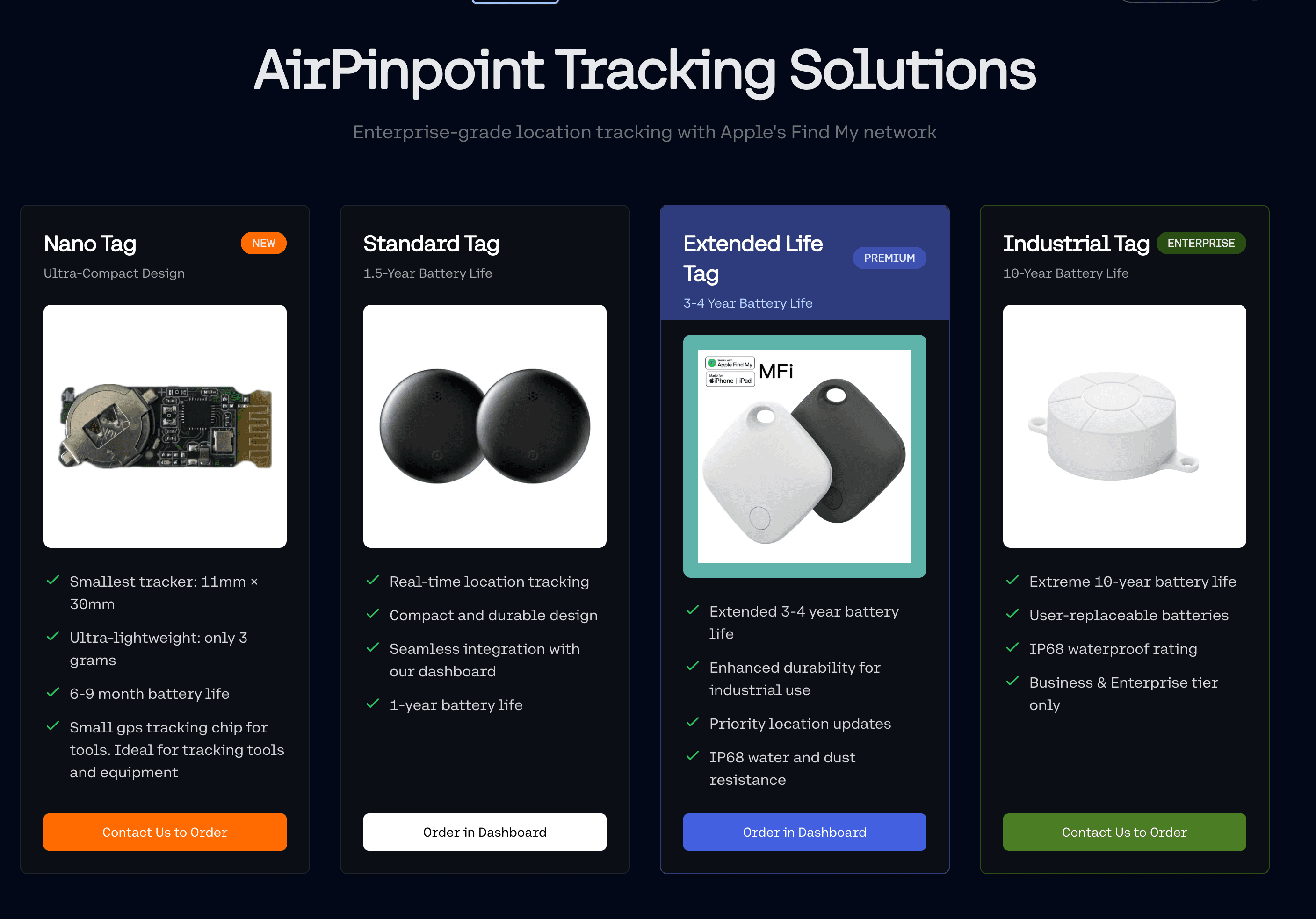
Tag by value, not by count. A tag costs $29 plus $11.99 a month, so tagging a $40 hand tool rarely pays and tagging a $1,200 rotary laser always does. The usual cut line contractors settle on is anything over about $300, plus the gang boxes that everything else lives in.
"Daily 5-Minute Audits Beat Monthly Marathons"
A monthly full count finds a problem up to thirty days after it happened, by which point nobody remembers who had the tool. A short daily spot-check of a random handful finds the same problem while the answer is still recoverable. The frequency matters more than the sample size.
"Automated Alerts Save Relationships"
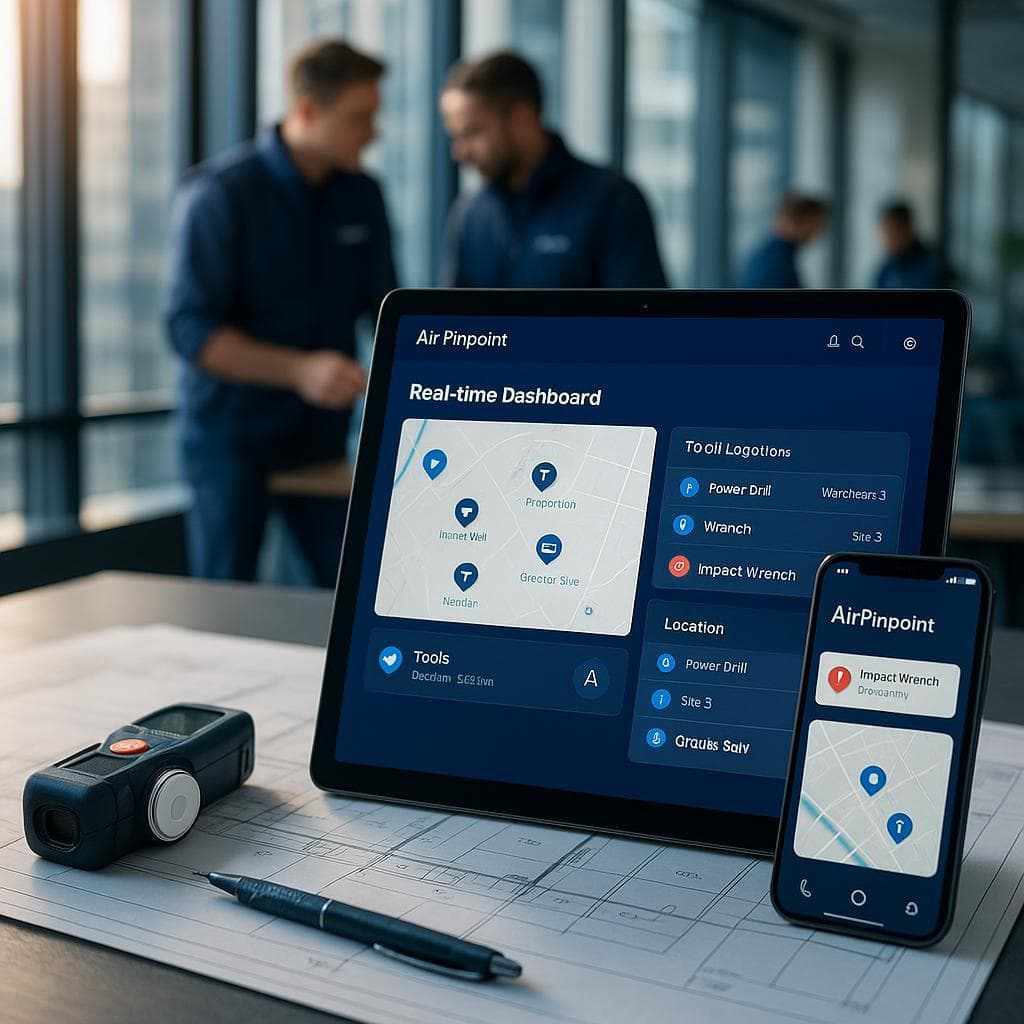
The friction in a crib is rarely the tooling, it is the crib manager becoming the person who chases people. Any system that sends the reminder before you do moves that conflict off your desk. Airpinpoint does not send overdue-tool reminders; it tells you where the tool physically is, which answers the other half of the same argument.
Metrics Every Tool Crib Manager Should Track
| Metric | Target | Why It Matters |
|---|---|---|
| Tool availability rate | 95%+ | Tools should be available when needed |
| Average checkout duration | Under 2 min | Fast checkout = less production downtime |
| Overdue return rate | Under 5% | Low overdue = good compliance culture |
| Annual loss/shrinkage rate | Under 2% | Industry benchmark for well-managed cribs |
| Search time incidents | 0/week | Nobody should be hunting for tools |
| Inventory accuracy | 98%+ | System matches physical reality |
| Cycle count completion | 100% | Never skip scheduled counts |
Getting Started in Tool Crib Management
If you're new to the role or considering the career:
First 30 Days
- Learn the inventory - Handle every tool, understand what's in your crib
- Map current workflows - Document existing checkout/return processes
- Meet key stakeholders - Production supervisors are your customers
- Identify quick wins - Fix obvious problems first to build credibility
- Review historical data - What tools are lost most often? Who's a chronic offender?
First 90 Days
- Implement or optimize software - Paper systems don't scale
- Establish cycle counting - Daily spot-checks catch problems early
- Set up automated alerts - Let the system do the nagging
- Build vendor relationships - Better pricing and service
- Document everything - Create procedures for consistency
First Year
- Measure and report ROI - Quantify your impact
- Propose improvements - Vending machines, RFID, GPS tracking
- Train backup staff - You need to be able to take vacation
- Benchmark against industry - Are you at best-practice levels?
- Plan for growth - What does the tool crib need in 2-3 years?
The Tool Crib Manager's Tech Stack
Modern tool crib managers leverage multiple technologies:
| Technology | Use Case |
|---|---|
| Tool crib software | Core checkout/return tracking |
| Industrial vending machines | 24/7 point-of-use access |
| RFID cabinets | FOD prevention in aerospace |
| Barcode scanners | Quick item identification |
| GPS/BLE trackers | Off-site tool location |
| Mobile apps | Floor access to inventory data |
| ERP integration | Unified enterprise systems |
Conclusion
The tool crib manager role is unglamorous but essential. When done well, production runs smoothly, costs stay controlled, and nobody notices the tool crib, because everything just works.
With salaries averaging $46,000-$52,000 and clear advancement opportunities into materials management and operations, it's a solid manufacturing career path for organized professionals who can balance technical knowledge with interpersonal skills.
The difference between a good tool crib and a chaotic one often comes down to one person: the manager. Invest in the role, equip them with the right tools, and watch the ROI compound.
 Our Solution