
Tool Crib Inventory Management
Effective tool crib inventory management is the difference between a manufacturing operation that runs smoothly and one that constantly scrambles for missing equipment. Unplanned downtime costs manufacturing $50 billion annually, much of it preventable with proper tool inventory practices.
This guide covers proven systems for keeping your tool inventory accurate and available, including real-world case studies from aerospace, automotive, and general manufacturing.
Why Tool Crib Inventory Is Uniquely Challenging
Unlike warehouse inventory that sits on shelves, tool crib inventory presents unique challenges:
| Challenge | Impact |
|---|---|
| Constant movement | Tools check out and return multiple times per day |
| High turnover | Popular tools may circulate 10+ times weekly |
| Informal borrowing | "I'll just grab this real quick" undermines tracking |
| Wear and calibration | Tools degrade and require maintenance/replacement |
| Shrinkage | 5-15% loss rates are common without controls |
| FOD risk | Forgotten tools can cause catastrophic failures (aviation) |
Standard warehouse inventory practices don't account for these dynamics. Tool cribs need specialized approaches.
The Business Case: Why This Matters
| Metric | Industry Impact |
|---|---|
| Manufacturing downtime | $50 billion/year globally |
| FOD incidents (aerospace) | $13 billion/year |
| Tool search time | 15-30 minutes per incident |
| Space wasted on disorganization | Up to 85% recoverable with VLM systems |
Real ROI example: One aerospace manufacturer (Allied Mechanical) gained ROI in just 2 months, saving more than $40,000 per month in perishable costs after implementing CribMaster.
Inventory Management Methods
Perpetual Inventory (Recommended)
Track every movement in real-time using software. When a tool checks out, inventory decreases. When it returns, inventory increases. You always know exactly what's available.
Pros:
- Real-time accuracy
- Instant visibility into who has what
- Automatic reorder triggers
- Audit trail for accountability
- Catches problems immediately
Cons:
- Requires software investment
- Staff must log every transaction
- Initial setup takes time
Best for: Any crib with 100+ tools
Periodic Inventory
Count everything on a schedule (weekly, monthly, quarterly) and reconcile against records.
Pros:
- Simpler to implement
- Lower technology requirements
- Works for very small tool cribs
Cons:
- Discrepancies discovered late
- No visibility between counts
- Problems compound over time
- Higher shrinkage rates
Best for: Very small operations (under 50 tools)
Verdict: Perpetual inventory is worth the investment for any crib with 100+ tools. The visibility alone justifies the cost.
Cycle Counting: The Secret to Accuracy
Full physical inventories are disruptive and often postponed. Cycle counting spreads the work across daily micro-counts that catch problems while memories are fresh.
ABC Classification
Divide inventory by value and usage:
| Category | Criteria | Count Frequency | % of Items | % of Value |
|---|---|---|---|---|
| A Items | High-value (over $500) or high-usage | Weekly | ~20% | ~80% |
| B Items | Medium value/usage | Bi-weekly | ~30% | ~15% |
| C Items | Low value consumables | Monthly | ~50% | ~5% |
Daily Cycle Count Process
- Generate sample - 10-20 random items from today's category
- Physical count - Locate and count each item
- System comparison - Compare to inventory records
- Discrepancy research - Investigate any mismatches immediately
- Record updates - Adjust and document cause
Time required: 15-30 minutes daily beats 8+ hours for monthly full counts.
Cycle Count Schedule Template
| Day | Focus |
|---|---|
| Monday | A items (high-value) |
| Tuesday | B items (medium) |
| Wednesday | Random sample (all categories) |
| Thursday | C items (consumables) |
| Friday | Problem items (chronic discrepancies) |
RFID Integration: The Aerospace Standard
The aerospace industry has driven RFID adoption in tool crib management due to Foreign Object Debris (FOD) requirements. FOD costs aviation $13 billion annually.
Why Aerospace Demands RFID
- FAA/EASA compliance requires tool accountability
- 70% of OEMs now use RFID to meet AS9100 and ITAR standards
- Zero tolerance for forgotten tools inside aircraft
- Flyable tags require 2kb to 64kb memory (vs standard RFID labels)
Real-World RFID Implementations
Boeing 787 Program
- RFID manages 1.3 million parts
- Reduced manual record-keeping by 90%
- Complete traceability from supplier to installation
Airbus A320 MRO Line (Cykeo RFID Tool Cabinet)
- Tool checks reduced from 47 minutes to 90 seconds per shift
- Zero FOD incidents for 11 consecutive months
- Full accountability at shift handoff
Stanley Black & Decker / PervasID Smart Cabinets
- Each cabinet tracks 1,000+ tools
- Real-time inventory via RFID
- Used by major aircraft manufacturers
German Auto Plant
- RFID tool tracking saves $420,000/year
- Eliminated duplicate tool purchases completely
Aubert & Duval (France)
- LiftTrak RFID solution across 23-hectare site
- 75% reduction in forklift handling time
- Real-time visibility indoors and outdoors
RFID ROI Summary
| Metric | Before RFID | After RFID |
|---|---|---|
| Manual audit time | 3 hours | 8 minutes |
| Tool check per shift | 47 minutes | 90 seconds |
| FOD incidents | Regular occurrence | Zero (11+ months) |
| Duplicate purchases | Common | Eliminated |
| Record-keeping effort | Manual | 90% reduction |
Tracking Technology Options
Comparison Matrix
| Technology | Best For | Range | Cost | Accuracy |
|---|---|---|---|---|
| Barcodes | Basic tracking | Line-of-sight | $ | Good |
| RFID | High-volume, aerospace | 10-30 feet | $$ | Excellent |
| Bluetooth (BLE) | Mid-range tools | 30-100 feet | $$ | Good |
| GPS/Cellular | Off-site tracking | Global | $$$ | Excellent |
Barcode Scanning
- Pros: Low cost, simple implementation, works everywhere
- Cons: Line-of-sight required, one-at-a-time scanning
- Best for: Small to medium operations, budget constraints
RFID (Radio Frequency Identification)
- Pros: Bulk scanning, no line-of-sight, automation-ready
- Cons: Higher cost, metal interference, tag placement matters
- Best for: Aerospace, automotive, high-volume operations
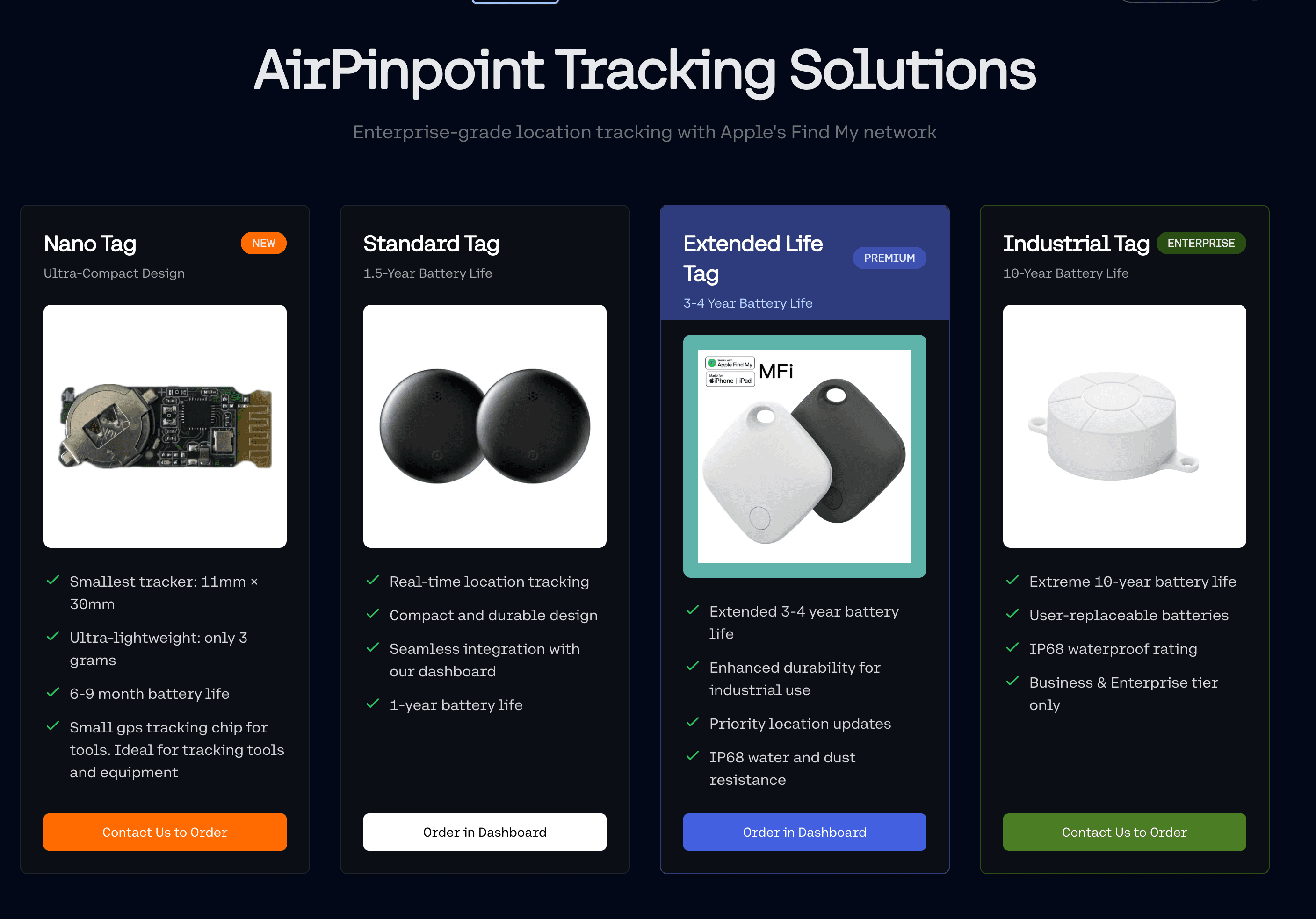
Bluetooth/BLE Trackers
- Pros: Good range, buzzer for locating, no subscription
- Cons: Battery life, indoor focus
- Best for: Mid-value tools, location finding
GPS Tracking
- Pros: Global coverage, real-time location, geofencing
- Cons: Subscription required, battery considerations
- Best for: High-value portables, off-site equipment
Common Inventory Problems and Solutions
Problem: Tools Not Returned
Symptoms: Perpetual inventory shows available, but tool can't be found
Solutions:
- Automated overdue notifications at 24, 48, 72 hours
- Supervisor escalation for chronic offenders
- "No checkout" policy for employees with overdue items
- GPS tracking for high-value portables
Problem: Informal Borrowing
Symptoms: Inventory counts short despite no checkout records
Solutions:
- Eliminate paper sign-out: require system checkout only
- Position tool crib for visibility (no back-door access)
- Install cameras at crib entrance
- Badge-required entry to tool area
- Self-checkout kiosks for 24/7 accountability
Problem: Consumable Stockouts
Symptoms: Critical items (drill bits, blades) run out unexpectedly
Solutions:
- Set minimum stock levels in software
- Automatic reorder triggers at threshold
- Kanban bins for visual inventory
- Vendor-managed inventory for high-volume consumables
Problem: Ghost Inventory
Symptoms: System shows items that don't physically exist
Solutions:
- Require receiving verification before adding to inventory
- Regular cycle counts catch ghosts
- Write-off process for damaged/lost items
- Audit checkout history for suspicious patterns
Problem: Tool Hoarding
Symptoms: Tools checked out but sitting unused in personal areas
Solutions:
- Maximum checkout duration limits
- Automatic alerts for extended checkouts
- Manager visibility into individual checkout patterns
- Shared tool cart programs
Software for Tool Crib Inventory
Essential Features
| Feature | Why It Matters |
|---|---|
| Barcode/RFID support | Fast, accurate check-in/out |
| Real-time dashboard | See availability instantly |
| Automated alerts | Overdue and low-stock notifications |
| User tracking | Know who has what |
| Reporting | Usage patterns and loss analysis |
| Mobile access | Manage from anywhere |
| ERP integration | Connect to enterprise systems |
| Multi-location support | Transfer tracking between sites |
Software Comparison (2025)
| Software | Best For | Key Strength | Price Range |
|---|---|---|---|
| CribMaster | Enterprise | 25+ vending hardware options, 12K+ customers | Custom quote |
| AutoCrib | Fortune 500 | 20,000+ machines installed, biometric auth | Custom quote |
| ToolHound | Multi-site | RFID transactions, job site transfers | Contact for quote |
| CRIBWARE | Material mgmt | Comprehensive inventory control | Contact for quote |
| TDM Systems | CNC/machining | CAM integration, tool lifecycle | Custom quote |
| GigaTrak | Small shops | Simple UI, budget-friendly | ~$79/month |
| Align | Growing ops | Unlimited users, mobile-first | $35/month (10 items) |
Hardware Integration
For high-volume operations, software integrates with physical systems:
| Hardware | Function | Investment |
|---|---|---|
| Industrial vending | 24/7 point-of-use access | $15,000-$20,000+ per unit |
| RFID cabinets | FOD prevention, bulk tracking | $5,000-$15,000 |
| Vertical lift modules | 85% space reduction | $50,000-$150,000 |
| Barcode scanners | Quick identification | $200-$500 each |
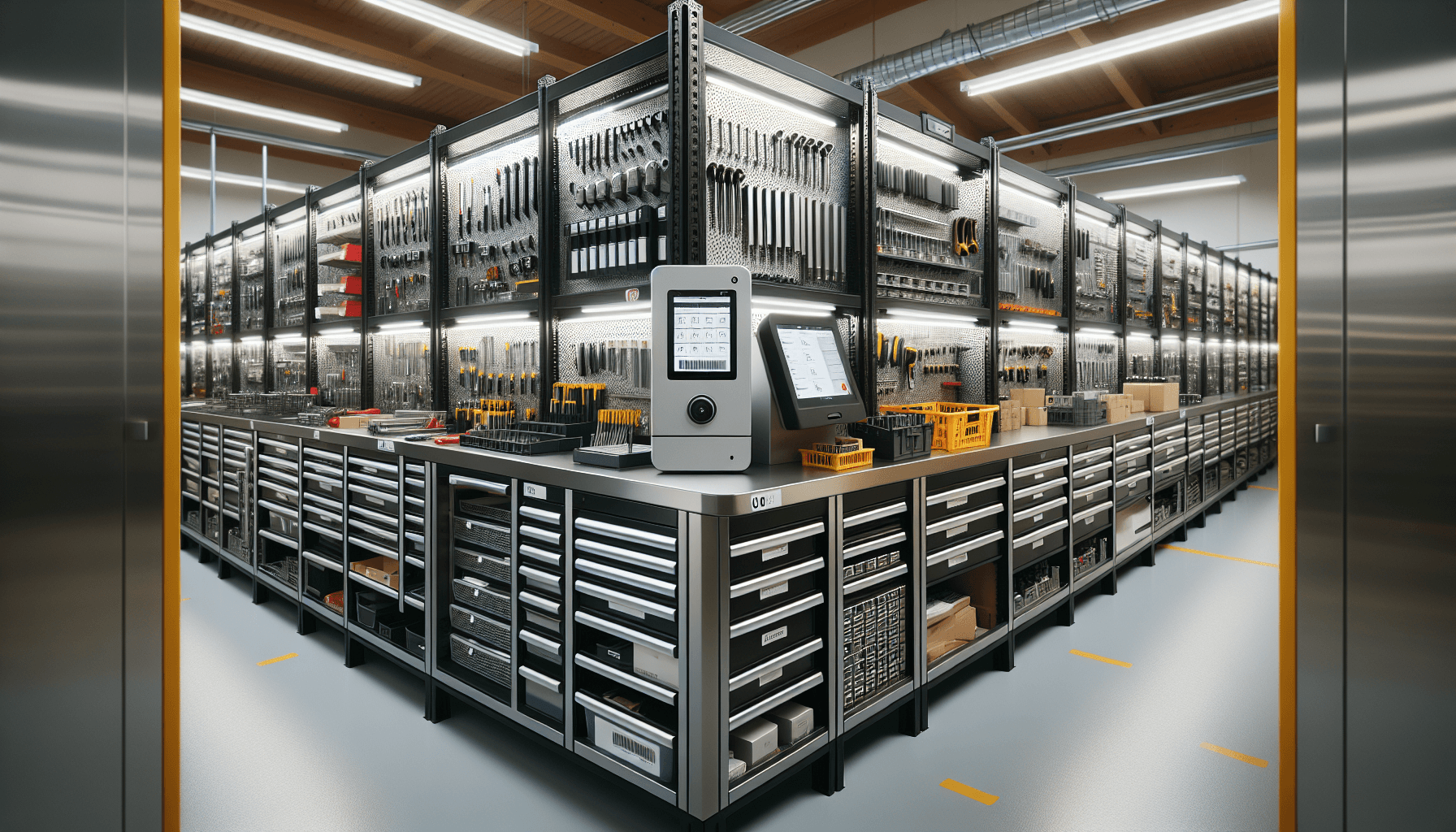
Physical Infrastructure Best Practices
Storage Organization
A combination of shelving, cabinets, tool boards, and shadow boards should be chosen based on size, weight, and accessibility needs:
| Storage Type | Best For |
|---|---|
| Open shelving | Frequently used, medium-sized tools |
| Shadow boards | Common hand tools, visual organization |
| Locked cabinets | High-value items, security requirements |
| Drawer systems | Small parts, organized by type |
| Vertical lift modules | High-density, automated retrieval |
Layout Principles
- Organize like a hardware store - Group by function (plumbing, electrical, etc.)
- Large, clear signage - Mark categories and subcategories visibly
- High-traffic items near front - Reduce walk time for popular tools
- Secure area for valuables - Locked storage for expensive items
- Dedicated check-in/out station - Single point of control
Space Optimization
Kardex Shuttle Vertical Lift Modules can reduce storage footprints by up to 85% compared to manual cribs, freeing space for additional production capacity.
Inventory Accuracy Metrics
Track these KPIs to measure effectiveness:
| Metric | Calculation | Target |
|---|---|---|
| Inventory Accuracy | (Correct counts / Total counts) × 100 | 98%+ |
| Shrinkage Rate | (Lost value / Total inventory value) × 100 | Under 2% |
| Stockout Frequency | Stockout incidents / Month | Under 2 |
| Cycle Count Completion | Completed counts / Scheduled counts | 100% |
| Discrepancy Resolution Time | Hours to resolve discrepancies | Under 24 hrs |
| Tool Availability | Available tools / Total tools | 95%+ |
Implementation Roadmap
Week 1-2: Assessment
- Full physical inventory count (baseline)
- Document current processes and pain points
- Identify major problem areas (where are you losing tools?)
- Calculate current shrinkage rate
- Select software solution
Week 3-4: System Setup
- Configure software with inventory data
- Set up user accounts and permissions
- Define reorder points and alert thresholds
- Tag all items with barcodes/RFID
- Create written procedures
Week 5-6: Implementation
- Train all staff on new procedures
- Begin requiring system checkouts (no exceptions)
- Start daily cycle counts
- Monitor compliance closely
- Address resistance immediately
Week 7+: Optimization
- Analyze usage data for insights
- Adjust reorder points based on actual demand
- Refine alert thresholds
- Add advanced features (vending, RFID)
- Measure and report ROI
Adding GPS for Off-Site Tools
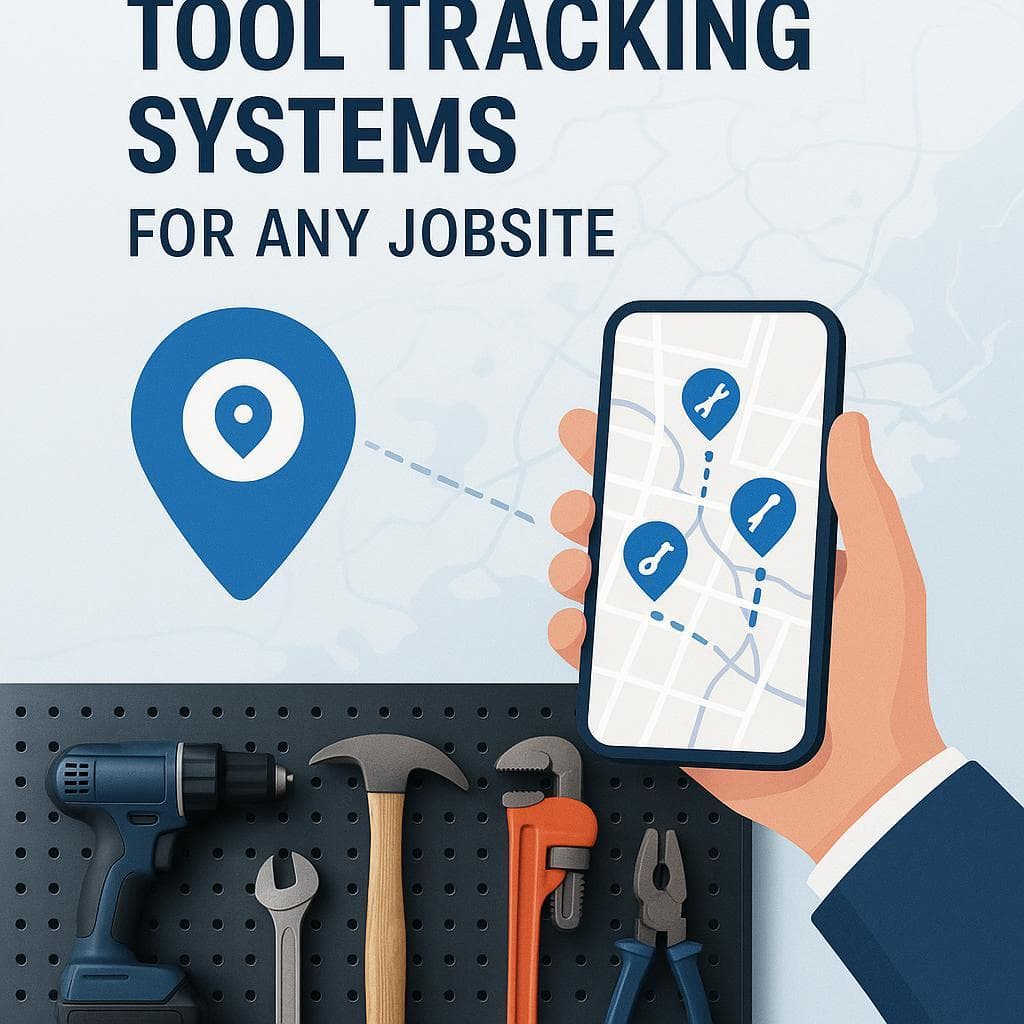
Even perfect inventory records don't help if you can't find the tool. For high-value equipment that leaves the facility:
| Feature | Benefit |
|---|---|
| Real-time location | Know where tools are at job sites |
| Geofencing | Alerts when tools leave authorized areas |
| Last-known location | Find tools faster when they're overdue |
| Recovery assistance | Locate stolen equipment |
Airpinpoint extends tool crib inventory management beyond your facility walls with affordable tracking that integrates with existing workflows.
Dedicated Tool Crib Attendant: Is It Worth It?
Self-checkout systems can work for smaller operations, but having a dedicated tool crib attendant or manager provides significant benefits:
| Benefit | Impact |
|---|---|
| Proactive inventory planning | Tools sent where needed before requests |
| Prevention of hoarding | Active monitoring of checkout patterns |
| Faster issue resolution | Someone accountable for problems |
| Better vendor relationships | Dedicated point of contact |
| Reduced delay | Tools prepped and ready |
For operations with 500+ tools or multiple shifts, a dedicated attendant typically pays for themselves in reduced losses and improved productivity.
Key Takeaways
- Perpetual beats periodic - Real-time tracking catches problems early
- Cycle count daily - 15 minutes daily beats 8 hours monthly
- Consider RFID for scale - The ROI is proven in aerospace and automotive
- Enforce compliance - The system only works if everyone uses it
- Measure what matters - Track accuracy, shrinkage, and stockouts
- Extend with GPS - Track valuable tools beyond facility walls
- Invest in infrastructure - Software + hardware + process = results
Inventory management isn't glamorous, but it's the foundation of an efficient tool crib. Get this right, and everything else becomes easier: production runs smoother, costs stay controlled, and tools are always where they should be.

 Our Solution