
Small Business Asset Tracking Playbook 2025: Tools, Tips & Budget-Friendly Solutions
Why Small Businesses Need Asset Tracking
Only 16% of small businesses use dedicated asset tracking software. The other 84% rely on memory, spreadsheets, or hope—and they're paying for it.
The cost of not tracking:
- $1,686/month average theft losses for small businesses
- 30% of business failures linked directly to internal theft
- $289,864 average annual loss for small firms from employee theft
- 5% of annual revenue lost to theft on average
- Work vans broken into 624 times daily—tools stolen every 23 minutes
Small businesses face unique vulnerability: fewer resources for loss prevention, tighter margins that feel losses more acutely, and fraud losses 28% higher than larger companies per incident.
The good news? Effective tracking doesn't require enterprise budgets. This playbook shows you how to protect your assets starting at $0.
Part 1: Understanding Your Risks
The Theft Landscape for Small Businesses
External theft threats:
- Van break-ins increased 15% in 2023
- Average loss per van theft: $2,000+ in tools
- Vans are 30 times more likely to be targeted than personal vehicles
- 83% of theft victims report losing business as a result
Internal theft reality:
- 75% of employees admit to stealing from employers at least once
- 95% of businesses experience some form of employee theft
- Employee theft schemes go undetected for 16 months on average
- Internal theft accounts for 29% of all retail shrinkage
The "shrinkage" problem:
- Acceptable shrinkage rate: 1-2% of revenue
- Small business actual rate: Often 5%+ without controls
- Employee theft average per incident: $2,180
- Combined internal/external theft: 66% of all shrinkage
Why Traditional Controls Fail
Many small businesses try:
- Honor system: Relies on trust that breaks down
- Paper sign-out sheets: Lost, ignored, or falsified
- Monthly inventory counts: Problems discovered too late
- Memory: "I'm sure I left it in the truck"
These methods can't tell you where your $800 laser level is right now—or who had it last when it goes missing.
Part 2: Choosing the Right Tracking Method
Tracking Technology Comparison
| Method | Cost | Best For | Limitations |
|---|---|---|---|
| Spreadsheets | Free | Very small inventories (<50 items) | Manual entry, no real-time data |
| QR codes/Barcodes | $0.05-0.50/tag | Check-in/out systems, inventory audits | Requires scanning discipline |
| AirTags | $29 one-time | Mobile tools, van equipment, urban areas | 32 tag limit per Apple ID, Apple network dependent |
| Bluetooth trackers (Tile) | $25-35 + subscription | Cross-platform needs | Smaller network than Apple |
| GPS trackers | $20-50 + $15-30/month | Vehicles, remote equipment, real-time needs | Ongoing subscription costs |
| RFID tags | $0.50-2.00/tag + reader | High-volume, gate/checkpoint scenarios | Infrastructure investment |
When to Use What
Use AirTags when:
- You operate in urban/suburban areas (strong Apple device density)
- You have under 50 assets to track per Apple ID
- Tools move between job sites, trucks, or workers
- You want low-cost, no-subscription tracking
- Recovery capability matters more than real-time monitoring
Use GPS trackers when:
- Assets travel to remote locations
- You need real-time tracking (fleet vehicles)
- Route history and geofencing are critical
- Equipment value justifies $15-30/month per device
Use QR codes/barcodes when:
- You need check-in/check-out accountability
- Building an audit trail matters
- Budget is extremely limited
- Assets stay within your facilities
Use spreadsheets only when:
- You have fewer than 50 assets total
- Assets rarely move locations
- You have strong discipline around updates
- It's a temporary solution while evaluating software
Part 3: Free and Low-Cost Software Options
Free Asset Tracking Software
AssetTiger
- Free tier: Up to 250 assets
- Features: Barcode scanning, alerts, audit history, reports
- Best for: Small businesses just starting with tracking
- Limitation: Pricing increased in 2025 ($220/year for 500 assets)
Snipe-IT
- Cost: Free (open source)
- Features: Full asset management, user check-out, maintenance tracking
- Best for: Technical teams comfortable with self-hosting
- Limitation: Requires your own server, no support in free version
Spiceworks
- Cost: Free forever
- Features: IT-focused asset tracking, network discovery
- Best for: IT equipment tracking specifically
- Limitation: Ad-supported, IT-centric features
Budget-Friendly Paid Options
| Software | Starting Price | Key Features |
|---|---|---|
| Sortly | ~$62.50/year (250 assets) | Visual inventory, mobile app |
| GoCodes | ~$49/month | QR code system, photos, maintenance |
| UpKeep Lite | $20/user/month | Maintenance focus, mobile-first |
| EZOfficeInventory | $40/month | Full-featured, good for equipment rental |
| Snipe-IT Hosted | $39.99/month | Managed hosting of open-source platform |
The AirTag + Platform Approach
For location tracking specifically, combine:
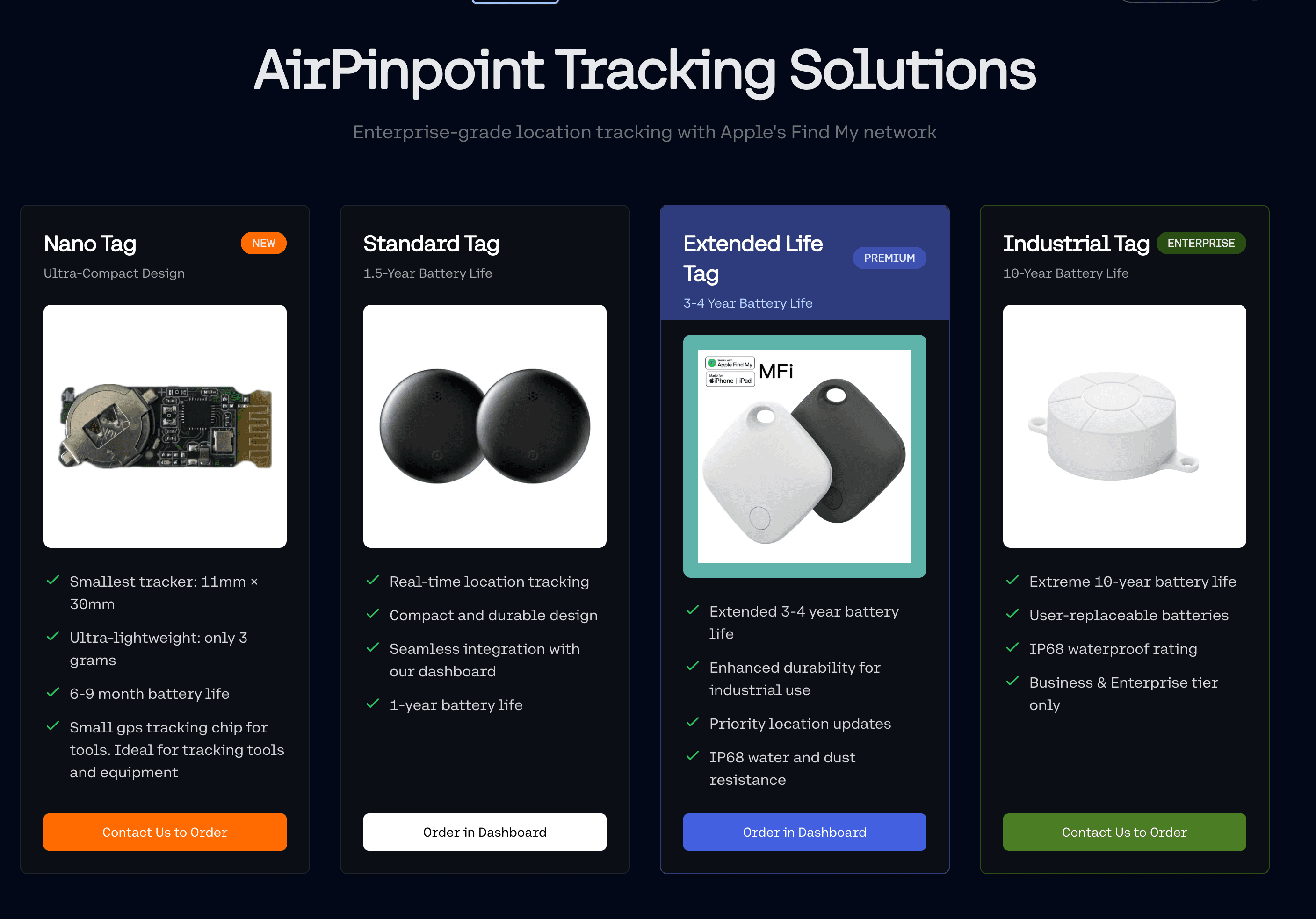
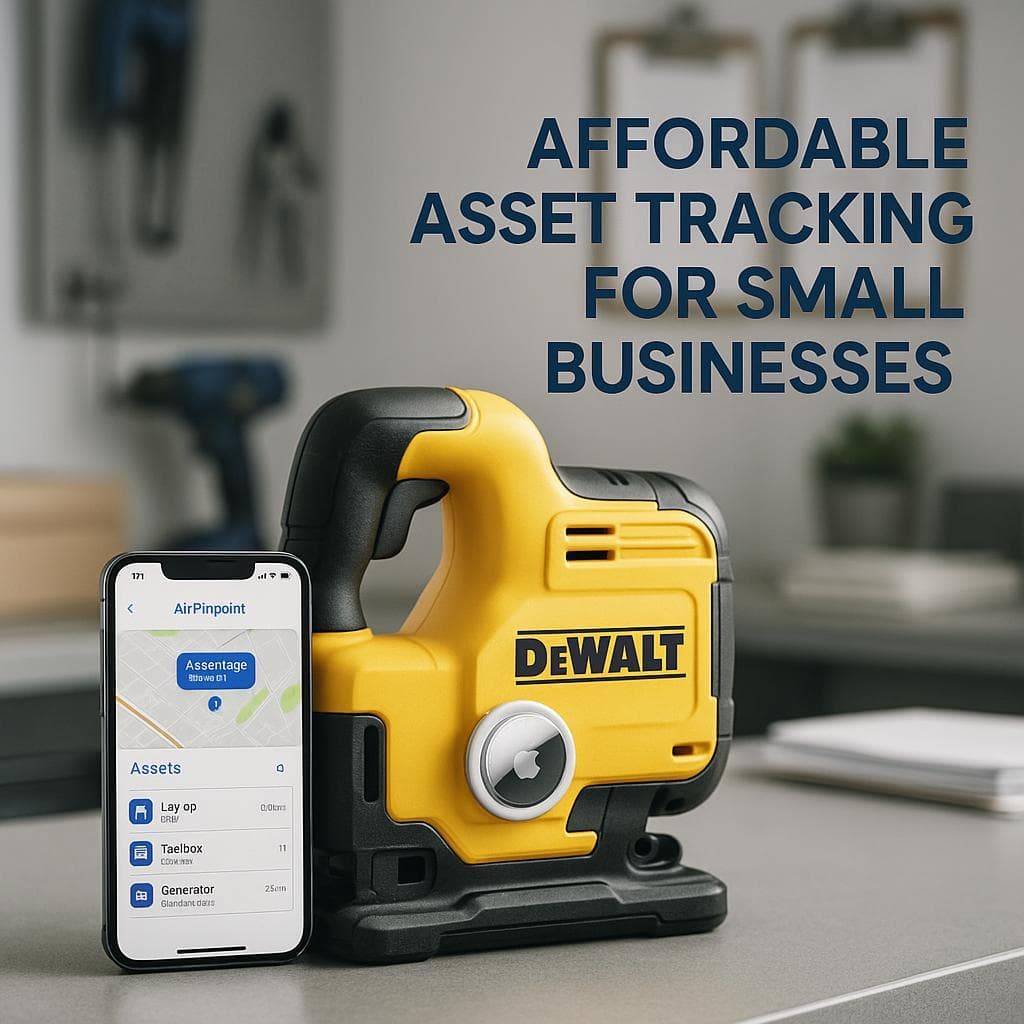
- AirTags ($29 each, no Apple subscription; Airpinpoint plans start at $11.99 per tag per month)
- Fleet management platform (Airpinpoint, etc.)
This provides:
- Real-time location across unlimited AirTags
- Geofencing and alerts
- Team access (not limited to one Apple ID)
- Dashboard for all assets
- Lower total cost than per-asset GPS subscriptions
Cost comparison for 50 assets:
- GPS trackers: $1,000 hardware + $12,000/year subscriptions = $13,000 first year
- AirTags + platform: $1,450 hardware + $1,800/year platform = $3,250 first year
Part 4: Implementation Roadmap
Week 1: Foundation
Day 1-2: Asset Inventory
- Walk through every vehicle, storage area, and job site
- Photograph each asset worth tracking
- Record: Name, serial number, approximate value, current location, condition
- Note any assets you can't find—these are likely "ghost assets"
Day 3-4: Prioritization Rank assets by:
- Value: Everything over $500 replacement cost
- Mobility: Items that leave your premises
- History: Anything stolen or lost before
- Criticality: Equipment that stops work if missing
Day 5-7: Technology Selection
- Decide tracking method based on Part 2 guidance
- Sign up for free software trial or free tier
- Order tags/trackers for priority assets
Week 2: Initial Deployment
Day 8-10: Tagging Priority Assets
- Install trackers on top 20-30 items first
- Test that each tracker reports correctly
- Document tracker placement for each asset
- Take photos showing tracker locations
Day 11-12: System Configuration
- Set up user accounts for team members
- Configure check-out/check-in workflows
- Establish geofences around key locations
- Set up alert notifications
Day 13-14: Team Training
- 30-minute training session for all employees
- Written one-page guide for common tasks
- Assign responsibility for daily check-in procedures
- Establish consequences for non-compliance
Week 3-4: Validation
- Monitor adoption and correct issues
- Address any system gaps discovered
- Add next wave of assets to tracking
- Conduct first manual audit vs. system data
Month 2+: Expansion
- Tag remaining priority assets
- Refine alert thresholds to avoid alert fatigue
- Review checkout compliance metrics
- Calculate early ROI indicators
Part 5: Industry-Specific Guidance
Service Contractors (HVAC, Plumbing, Electrical)
Key challenges:
- Tools spread across multiple service vehicles
- Equipment borrowed between technicians
- Job site tool sharing
- High-value diagnostic equipment
Recommended approach:
- AirTags on all power tools over $200
- QR code checkout system for shared equipment
- Vehicle GPS for route optimization and after-hours protection
- Daily end-of-shift tool check-in requirement
Software options:
- ServiceTitan (comprehensive field service + inventory)
- QR Inventory (affordable tool tracking)
- Sortly (visual inventory management)
Contractors and Construction
Key challenges:
- Multiple job sites simultaneously
- Subcontractor tool mixing
- Equipment transfers between sites
- Trailer and equipment theft
Recommended approach:
- GPS on trailers and heavy equipment
- AirTags on power tools, generators, compressors
- Job site geofencing with after-hours alerts
- Tool crib attendant or designated checkout manager
Statistics to justify investment:
- Construction equipment theft: $300M-$1B annually
- Recovery rate without tracking: 20%
- Recovery rate with GPS: 90%+
Retail and Service Businesses
Key challenges:
- Employee theft (29% of shrinkage)
- Cash register equipment
- POS hardware and tablets
- Inventory management
Recommended approach:
- RFID or barcode system for inventory
- Asset tags on all electronics
- Regular spot audits (weekly minimum)
- Clear chain of custody for high-value items
Key metric:
- Acceptable shrinkage: 1-2% of revenue
- Action threshold: Above 2% requires intervention
Part 6: Protecting Work Vehicles
Van Security Essentials
Work vans face unique risks:
- 624 break-in attempts daily across the industry
- 15% increase in van thefts in 2023
- Average stolen tool value: $2,000+
- 41% of drivers still leave tools overnight despite risks
Prevention Strategies
Physical security:
- Install slam locks (auto-lock when doors close)
- Add internal security cages
- Use steering wheel locks (visual deterrent)
- Consider deadlocks on rear/side doors
Electronic protection:
- Alarm systems with door sensors (all doors, not just front)
- GPS vehicle tracking
- Keyless entry protection (Faraday pouch for fobs)
- AirTags hidden in tool bags/boxes
Behavioral practices:
- Park in visible, well-lit areas
- Back up to walls (blocks rear door access)
- Remove or hide high-value tools overnight
- Never leave keys or key fobs in vehicle
- Vary parking locations when possible
Statistics that justify investment:
- Vans with upgraded locks: 50% less likely to be targeted
- Keyless van thefts rose 44% from 2016
- Insurance claims often don't cover full tool value
Part 7: Measuring Success
Key Metrics to Track
| Metric | Target | Why It Matters |
|---|---|---|
| Checkout compliance | 95%+ | System only works if used |
| Lost/stolen incidents | Decrease 50%+ | Direct loss prevention |
| Recovery rate | 80%+ when theft occurs | Tracking effectiveness |
| Time to locate | Under 5 minutes | Operational efficiency |
| Ghost asset rate | Under 5% | Inventory accuracy |
| Shrinkage rate | Under 2% of revenue | Overall loss control |
Calculating Your ROI
Track these savings:
- Theft losses avoided (compare to pre-tracking baseline)
- Emergency purchases eliminated
- Rental costs saved (from knowing what you own)
- Time saved searching for equipment
- Insurance premium reductions
Expected returns:
- RFID/barcode systems: Positive ROI in under 12 months
- First-year cost savings: 30% reduction in equipment-related costs
- Ongoing savings: 5% additional annually
- Time savings: 75% reduction in equipment search time
ROI Example
10-person service company before tracking:
- Monthly theft/loss: $1,200
- Emergency tool purchases: $400/month
- Time searching for tools: 30 hours/month @ $40/hour = $1,200/month
- Annual avoidable costs: $33,600
After implementing tracking ($3,000 first-year cost):
- Theft reduced 60%: Save $8,640/year
- Emergency purchases reduced 70%: Save $3,360/year
- Search time reduced 75%: Save $10,800/year
- First-year savings: $22,800
- First-year ROI: 660%
Part 8: Common Mistakes to Avoid
Implementation Errors
- Tracking everything at once: Start with 20-30 priority items, prove the system, expand
- No enforcement: A checkout system nobody uses is worthless
- Ignoring team buy-in: Get employee input early; resistance kills adoption
- Overcomplicating: Simple systems get used; complex ones get abandoned
- Set-and-forget: Systems need regular audits and refinement
Technology Mistakes
- Wrong tool for the job: AirTags in remote areas, GPS for low-value items
- Obvious tracker placement: Thieves remove visible trackers
- Ignoring battery replacement: Dead trackers are useless
- Single point of failure: Backup high-value items with secondary trackers
- No geofencing: Alerts after theft much more than discovering loss days later
Policy Mistakes
- No written procedures: Verbal instructions get forgotten
- No consequences: Tracking without accountability doesn't change behavior
- Ignoring patterns: Same tools missing repeatedly = systematic problem
- No regular audits: Trust but verify—physical counts still matter
- Delayed action: Address discrepancies immediately, not "when you have time"
The Bottom Line
Asset tracking isn't just for large enterprises. With free software options and $29 AirTags, any small business can implement meaningful protection against the $1,686/month average theft losses.
Start here:
- Inventory your 30 most valuable mobile assets today
- Sign up for a free AssetTiger or Snipe-IT account
- Add AirTags to your top 10-15 tools that leave your premises
- Establish a simple checkout procedure
- Conduct weekly spot audits
The 84% of small businesses without tracking are leaving money on the table—and in the hands of thieves. Don't be one of them.
Your tools are your livelihood. Protect them.


 Our Solution